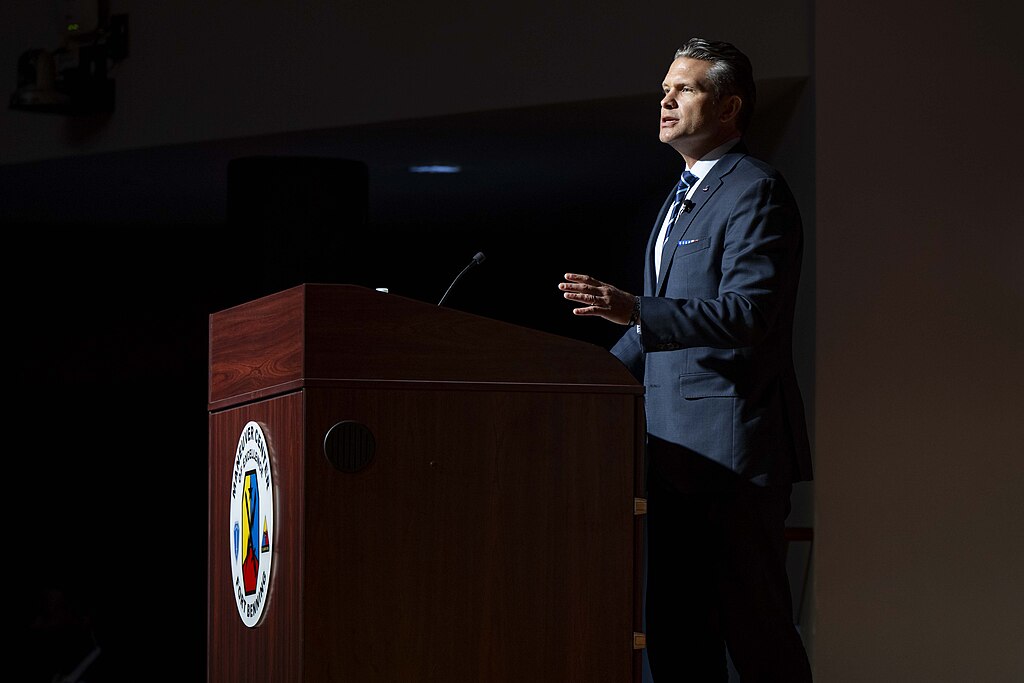
U.S. Defense Secretary Pete Hegseth defended the controversial follow-up strike on a suspected drug-smuggling vessel, stating he observed the initial September 2 attack in real time but did not witness any survivors in the water. Speaking during a Cabinet meeting at the White House alongside President Donald Trump, Hegseth offered his most detailed explanation yet of the operation, which has raised bipartisan concerns in Congress about legality and rules of engagement.
According to Hegseth, he watched the first U.S. strike live before moving on to another meeting, noting that he “did not personally see survivors” and describing the situation as part of the “fog of war.” Hours later, he said he was informed that Admiral Frank Bradley ordered a second lethal strike intended to sink what remained of the vessel and eliminate any remaining threat. The Washington Post previously reported that Bradley’s decision followed internal pressure to ensure no one survived the operation, though Hegseth has denied issuing such a directive.
U.S. officials told Reuters that Hegseth has overseen lethal actions against drug-trafficking vessels as part of a broader Trump-era strategy treating suspected narcotics smugglers similarly to terrorist threats—a policy widely debated by legal experts. However, the officials did not confirm his involvement in the immediate decision to authorize the second strike, emphasizing that operational control rested with Bradley, commander of U.S. Special Operations Command.
The White House has maintained that Bradley had full authorization for the second strike. Hegseth reiterated that stance, saying, “We have his back.” Trump, who earlier expressed he would not have preferred a second strike, nonetheless voiced support for his defense secretary while acknowledging he was unaware the second attack took place at the time.
The incident continues to spark scrutiny as lawmakers and analysts question proportionality, transparency, and long-term implications of expanding military authority in counter-narcotics operations.