


 Trump Weighs FBI Probe Into Nolan Wells’ Death
  Flavio Bolsonaro Leads Lula 49%-45% in Brazil Runoff Poll
  EU Rejects Italy, Greece Calls for Fiscal Rule Flexibility
  US Charges Maduro and Wife With Torture Conspiracy
  Maduro, Wife May Face New US Torture Charges
  ICC Rules Duterte Fit to Stand Trial in Drug War Case
  Trump Buys Up to $25M in Meta Stock, Invests in SpaceX Debt
  US Pressures Allies to Distance From Anti-Disinformation Conference
  US, Greece Launch New Counterterrorism Security Program
  Marco Rubio Warns Russia-Ukraine War Could Spark Wider Conflict
  Iran Refuses to Halt Uranium Enrichment Amid US Nuclear Demands
  Venezuela’s Machado Calls for Elections by July 2027
  US Suspends Microsoft, Adobe From Green Card Program
  Berlin Coalition Talks Advance After Left Party Antisemitism Deal
  Saudi Arabia Probes Flydubai Cockpit Attack
  Trump Says He Deserves 2026 Nobel Peace Prize Despite Uncertain Chances
  Saudi Airport Attacks Kill Three as Yemen Fighting Escalates


 Add as a preferred source on Google
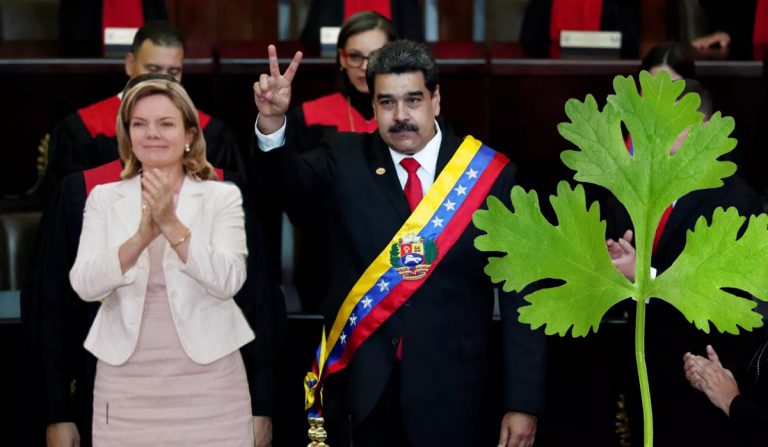
The United States on Thursday announced a new round of sanctions against Venezuela, significantly escalating pressure on President Nicolás Maduro’s government by targeting members of the first family, oil tankers, and shipping companies involved in the country’s crude exports. The move underscores Washington’s continued efforts to cut off revenue streams that sustain Caracas amid an ongoing political and economic crisis.
According to a statement from the U.S. Treasury Department, sanctions were imposed on three nephews of Venezuelan first lady Cilia Flores, along with six crude oil tankers and six shipping companies accused of transporting Venezuelan oil in violation of U.S. restrictions. U.S. officials said the entities and vessels have engaged in deceptive and unsafe shipping practices that generate financial resources for what the Treasury described as Maduro’s “corrupt narco-terrorist regime.”
The newly sanctioned oil tankers are large supertankers that recently loaded Venezuelan crude, based on internal shipping documents from state-owned oil company PDVSA. Four of the vessels, including the H. Constance built in 2002 and the Lattafa built in 2003, are registered under the Panamanian flag, while the remaining two are flagged in the Cook Islands and Hong Kong. The sanctions are expected to further complicate Venezuela’s ability to export oil, a critical source of hard currency for the country.
The announcement comes amid heightened U.S. military activity in the southern Caribbean and renewed political rhetoric from President Donald Trump, who has openly called for Maduro’s removal from power. A day earlier, Trump said U.S. authorities had seized a sanctioned oil tanker off the Venezuelan coast, signaling a more aggressive enforcement posture.
Among those sanctioned are Franqui Flores and Efraín Antonio Campo Flores, known internationally as the “narco nephews.” The two were arrested in Haiti in 2015 during a U.S. Drug Enforcement Administration sting operation and later convicted in the United States in 2016 on drug trafficking charges. Their inclusion highlights Washington’s focus on individuals linked to Venezuela’s ruling elite.
Overall, the expanded sanctions reflect the United States’ broader strategy to isolate Maduro’s government economically and politically, while increasing pressure on networks involved in Venezuela’s oil trade and alleged illicit activities.







