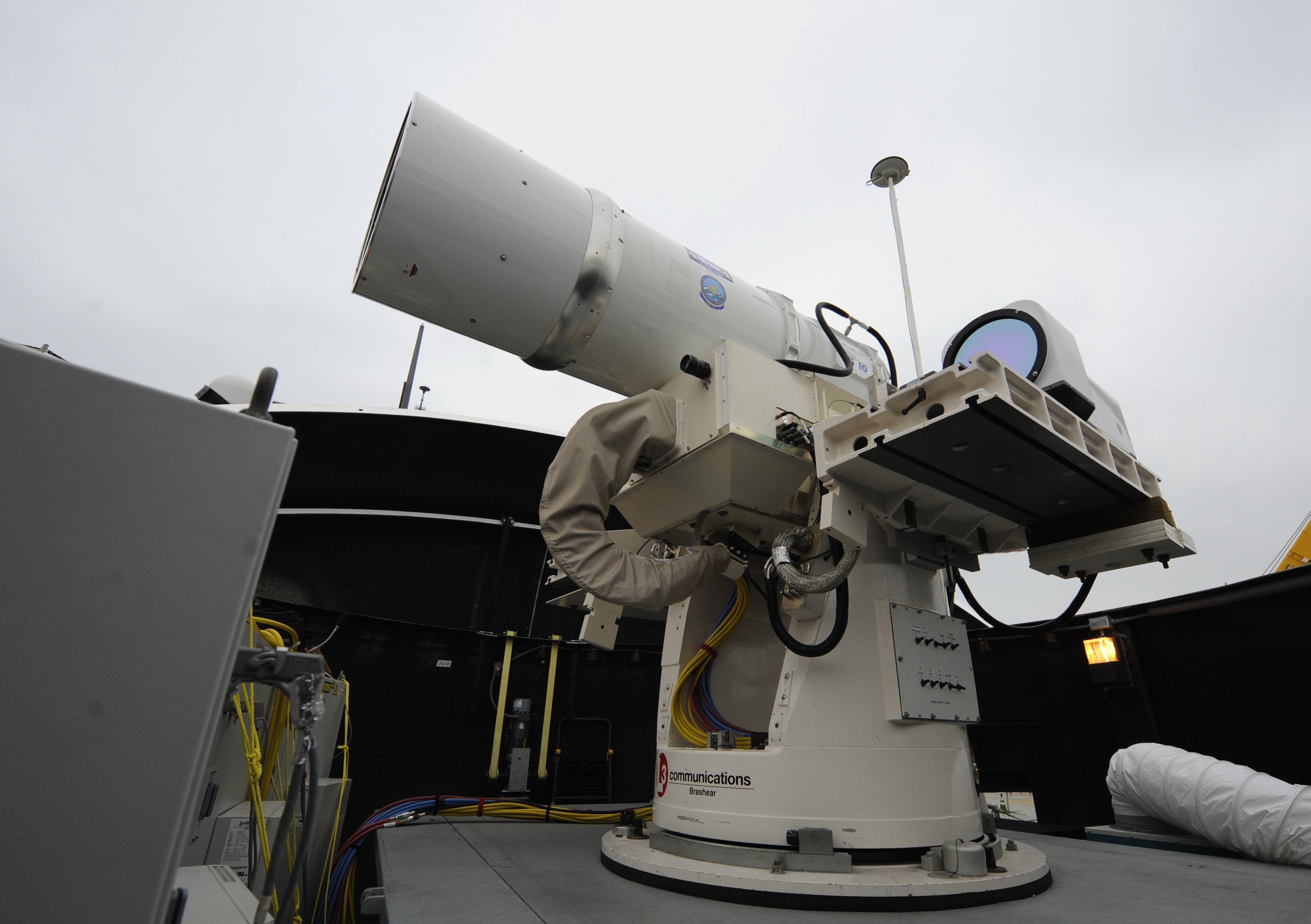
The world has known for some time that the US Navy has been developing laser-based weaponry to bolster the country’s defense. In a recent announcement, it would seem that this new weapon is finally ready for deployment. This means that come the next war, the US will be using laser against its enemies, officially bringing in a new stage of warfare.
Called the Laser Weapons System (LaWS), it is meant to be used on vehicles and machines more than man. In a recent CNN article, Capt. Christopher Wells of the US Navy explained what makes the new weapon superior to conventional ones that exist today and what gives its user such a huge advantage.
“It is more precise than a bullet," Wells said. "It's not a niche weapon system like some other weapons that we have throughout the military where it's only good against air contacts, or it's only good against surface targets, or it's only good against, you know, ground-based targets -- in this case this is a very versatile weapon, it can be used against a variety of targets."
Its precision is exactly what makes it such a deadly tool of combat. Having the kind of weapon that never misses or hardly ever does will make enemies think twice about attacking.
On the other hand, it’s worth noting that the Geneva Convention actually prohibits the use of laser weapons against actual human beings, Futurism reports. That is to say, the weapon can only be used to disable unmanned aerial vehicles or destroy the engines of water-bound vehicles.
The same goes for incoming missiles and cars if the vehicles actually get close enough for the laser to see. For now, the weapon is mounted on a ship, so it’s mostly about keeping the coasts of the US safe from attacks. What really makes LaWS such an appealing prospect, however, is the fact that every shot only costs taxpayers $1 compared to the millions that missiles would cost.