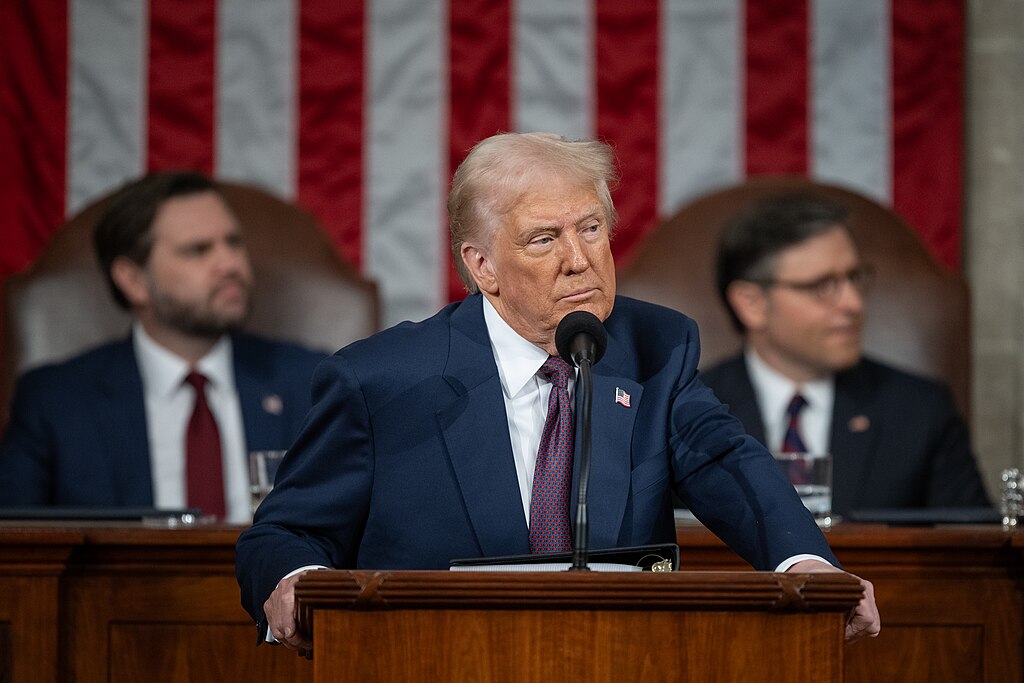
U.S. recession fears eased on Thursday after President Donald Trump announced a 90-day delay in imposing steep trade tariffs, leading to a sharp decline in betting market odds.
On Polymarket, a blockchain-based prediction platform, the probability of a U.S. recession in 2025 fell to 49%, down from a 66% peak on Wednesday. Traders are currently wagering 49 cents per dollar on a recession and 51 cents against one, reflecting growing optimism over the economic outlook.
The shift in sentiment follows Trump’s postponement of “reciprocal” tariffs targeting major U.S. trading partners. The delay reduced investor concerns over supply chain disruptions and inflationary pressures that could undermine consumer spending and economic growth.
In response, several brokerages and investment banks revised their U.S. recession forecasts downward, citing renewed hopes that Trump may soften his global tariff agenda.
However, Trump still imposed a 10% duty on all U.S. imports and maintained 25% tariffs on automobiles and select commodities. Tariffs on Chinese imports were hiked to 125% from 104%, escalating tensions with Beijing. China retaliated with 84% tariffs on American goods, keeping trade war risks high.
Trump also signaled upcoming tariffs on pharmaceutical imports, adding to market uncertainty.
Despite the temporary reprieve, analysts warn that the trade conflict with China remains a significant economic risk. China is a key supplier of industrial and consumer goods to the U.S., and replacing these imports would be difficult and costly.
While the 90-day extension has temporarily calmed markets, the potential for renewed tariff escalation continues to weigh on long-term U.S. economic prospects, keeping recession risks alive.