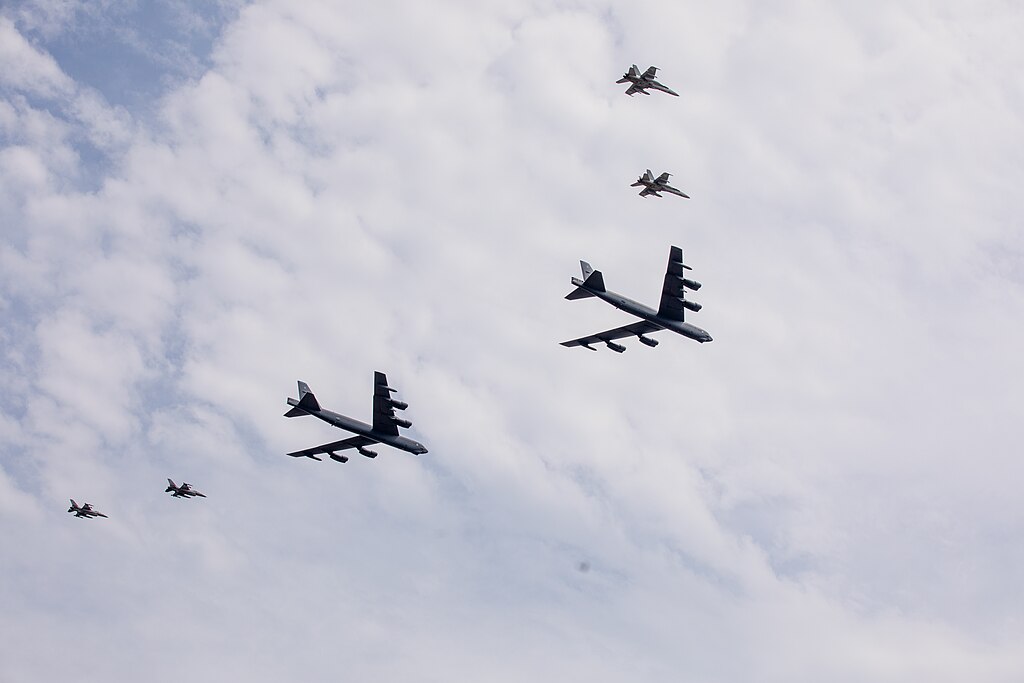
South Korea, Japan, and the United States conducted a joint air drill on Friday, featuring a U.S. B-52H strategic bomber and fighter jets over international waters near the Korean Peninsula, South Korea’s defense ministry announced. This marks the first deployment of a B-52 bomber to the region for training purposes in 2025.
The trilateral drill aimed to strengthen deterrence capabilities in response to escalating nuclear and missile threats from North Korea. The B-52, a long-range bomber capable of carrying nuclear weapons, highlights Washington’s extended deterrence commitment to its East Asian allies.
Coinciding with the drill, defense chiefs from the three nations convened in Seoul for their annual meeting. They reaffirmed the importance of enhancing trilateral security cooperation to counter challenges from North Korea and maintain stability in the Indo-Pacific.
U.S. Chairman of the Joint Chiefs of Staff General Dan Caine emphasized the need for continued cooperation and strategic readiness. “We’re illuminating a future path together, a path where partnerships can evolve through persistent and regular engagement,” he said. Caine also warned of an "unprecedented military build-up" by both North Korea and China, calling on allies to stay vigilant.
The meeting included South Korea’s Admiral Kim Myung-soo and Japan’s General Yoshihide Yoshida, who echoed the urgency of deeper defense alignment amid growing regional tensions.
This latest show of force comes amid ongoing concerns over Pyongyang’s weapons development and Beijing’s assertiveness, reinforcing the allies’ shared goal of a free and open Indo-Pacific.
The U.S. military presence and frequent joint exercises with Seoul and Tokyo remain central to deterring aggression and preserving peace in Northeast Asia.