
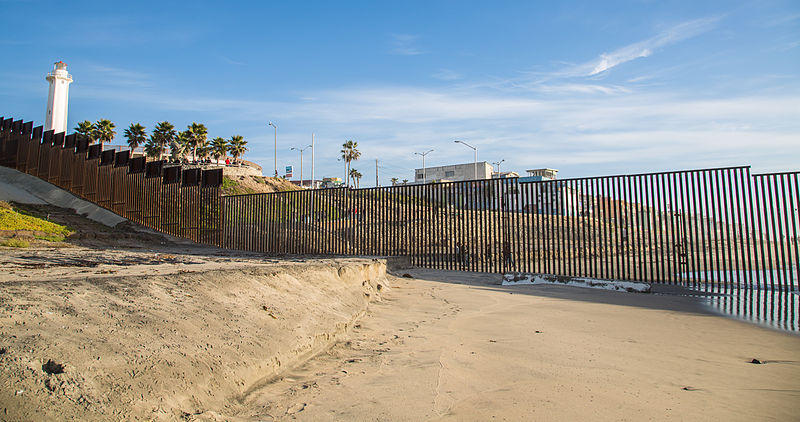
The United States Supreme Court upheld the controversial border policy that allowed US officials to expel migrants trying to enter the country. The decision by the high court puts the policy in place for the meantime, as the final ruling is expected by June next year.
The Supreme Court, in a 5-4 vote, temporarily upheld the Title 42 policy at the request of 19 Republican state attorneys general to put on hold a judge’s decision that would invalidate the border policy on Tuesday. The states argued that lifting the policy could only result in an increase of a record number of border crossings and strain the resources of the states where migrants end up.
The court said it would hear the arguments on whether the states could intervene to defend Title 42 in the court’s February session. Chief Justice John Roberts issued a temporary administrative stay on the policy on December 19 as the court considered whether to keep the policy for longer. Prior to Roberts’ order, the policy was set to expire on December 21.
Conservative justice Neil Gorsuch joined the three liberal justices – Elena Kagan, Sonia Sotomayor, and Ketanji Brown Jackson, in dissent. Gorsuch called the order “unwise” and questioned why the court was rushing to hear a dispute on “emergency decrees that have outlived their shelf life” and that the only possible answer was because the states alleged that Title 42 would help address what they saw as an “immigration crisis.”
“But the current border crisis is not a COVID crisis,” said Gorsuch in an opinion joined by Jackson. “And courts should not be in the business of perpetuating administrative edicts designed for one emergency only because elected officials have failed to address a different emergency.”
Following the Supreme Court’s temporary upholding of Title 42, the Biden administration is planning to expand the restrictions towards Cuban, Haitian, and Nicaraguan migrants that are caught at the southwest bank of the border it shares with Mexico. The administration will also allow some to enter the US on humanitarian grounds at the same time, according to three officials familiar with the matter.


