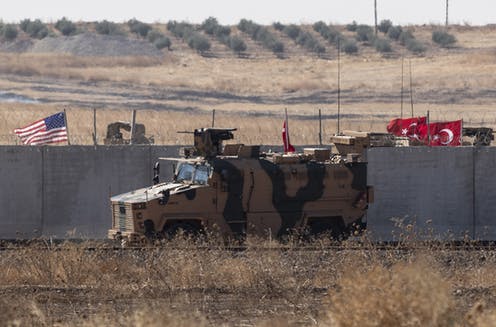
The United States has begun a “deliberate and conditions-based transition” of its military presence in Syria, according to a senior U.S. official, signaling a significant shift in Washington’s counterterrorism strategy in the region. While recent reports suggested that all roughly 1,000 U.S. troops in Syria could be withdrawn, officials clarified that American forces remain prepared to respond to emerging ISIS threats.
The Wall Street Journal reported that the U.S. was planning a full troop withdrawal. However, a senior administration official, speaking on condition of anonymity, emphasized that U.S. forces are still positioned to counter any resurgence of ISIS. The official noted that the American military presence at its previous scale is no longer necessary, citing the Syrian government’s stated willingness to take primary responsibility for combating terrorist threats within its borders.
This development reflects evolving U.S.-Syria relations and a broader reassessment of American involvement in the Middle East. The Pentagon recently confirmed that U.S. troops completed their withdrawal from a key strategic base in Syria, transferring control to Syrian forces. The handover marks another step in what analysts describe as a gradual drawdown of American military operations in the country.
The U.S. military intervention in Syria initially focused on defeating ISIS and stabilizing the region. Although the extremist group has been significantly weakened, U.S. officials continue to monitor the situation closely to prevent any revival of the terrorist network. The conditions-based approach suggests that further troop reductions will depend on security developments and the Syrian government’s effectiveness in managing counterterrorism efforts.
As the U.S. troop withdrawal from Syria progresses, global attention remains fixed on how the transition will impact regional stability, counter-ISIS operations, and broader Middle East security dynamics.