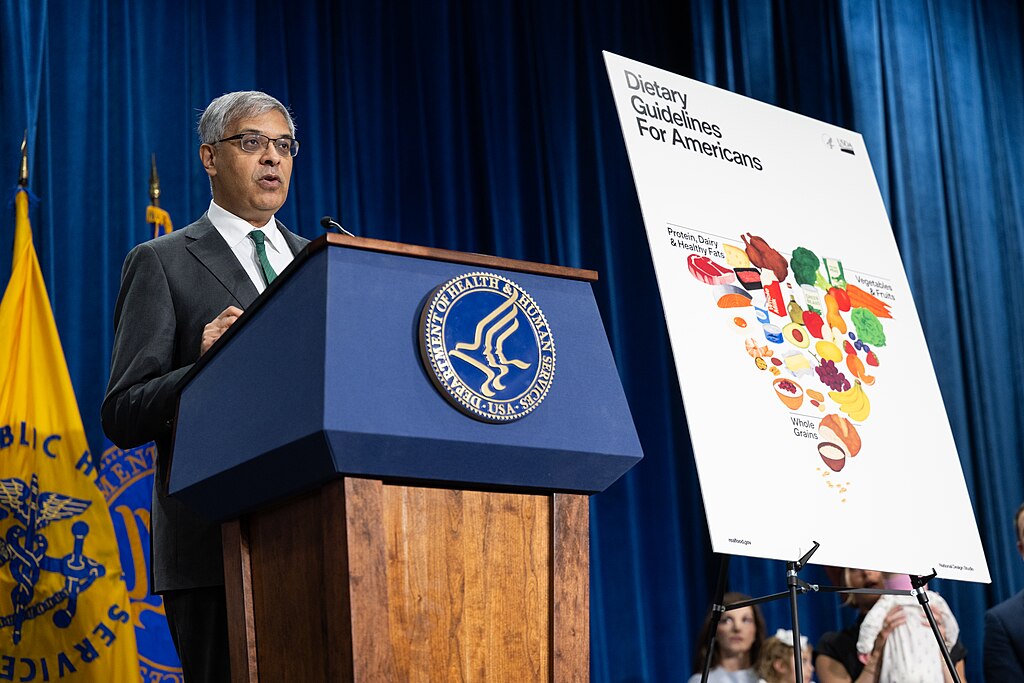
U.S. National Institutes of Health (NIH) Director Jay Bhattacharya will assume the role of acting director of the Centers for Disease Control and Prevention (CDC), according to a Trump administration official. The appointment marks a major leadership shift within the Department of Health and Human Services (HHS) as the administration prepares for the 2026 midterm elections.
Bhattacharya, a Stanford University professor known for criticizing COVID-19 lockdowns and pandemic restrictions, will now oversee both the NIH and the CDC. The NIH manages a nearly $50 billion budget and funds thousands of medical research projects nationwide, while the CDC leads public health surveillance, disease prevention, and emergency response efforts from its Atlanta headquarters. About two-thirds of the CDC’s budget supports state and local public health agencies.
HHS Deputy Secretary Jim O’Neill, who has served as acting CDC director since August, will step down from both roles as part of the department’s restructuring. He is expected to be offered the position of National Science Foundation director. Bhattacharya’s dual leadership role has raised concerns among former CDC officials, who argue that managing two major federal health agencies simultaneously could weaken the nation’s ability to respond to public health threats.
The CDC has experienced ongoing turmoil, including budget cuts, staffing reductions, and controversy under HHS Secretary Robert F. Kennedy Jr. President Donald Trump previously dismissed CDC Director Susan Monarez after disagreements over vaccine policy changes. Her firing prompted several senior resignations and intensified scrutiny of vaccine guidance decisions, including revisions to childhood immunization recommendations.
Under federal law, Bhattacharya may serve as acting CDC director only until late March unless a permanent nominee is confirmed by the U.S. Senate. Meanwhile, Kennedy announced additional HHS leadership appointments aimed at improving coordination with the White House ahead of the midterm elections, with Republicans expected to focus on healthcare costs, prescription drug pricing, and access to healthy food.