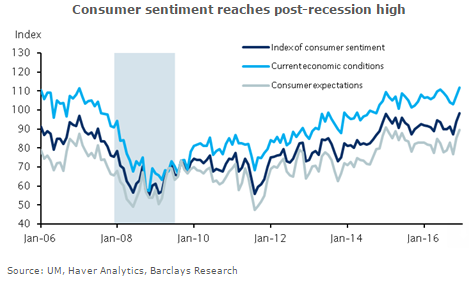
Consumer sentiment in the United States reached post-recession high during the month of December, post the victory of U.S. President-elect Donald Trump and expectations of a protectionist policy by him.
The University of Michigan index of consumer sentiment was revised slightly higher in the final December estimate to 98.2, from 98.0 and reached a post-recession high. The current conditions index was revised slightly lower to 111.9 (previous: 112.1), while the expectations index was revised higher to 89.5 (88.9).
Both short- and longer-term inflation expectations were revised lower, to 2.2 and 2.3 percent, from 2.3 and 2.5 percent respectively. Inflation expectations in this survey remain soft and the latest decline brings the longer-run measure to its historical low.
"Ongoing solid readings on consumer confidence reinforce our view that GDP growth should remain firm in the near term, and we see the level of confidence as consistent with ongoing strength in consumer spending," Barclays Research said in its latest research note.
Meanwhile, the dollar index traded at 102.87, down -0.14 percent, while at 6:00GMT, the FxWirePro's Hourly Dollar Strength Index remained neutral at -14.80 (a reading above +75 indicates a bullish trend, while that below -75 a bearish trend). For more details, visit http://www.fxwirepro.com/currencyindex