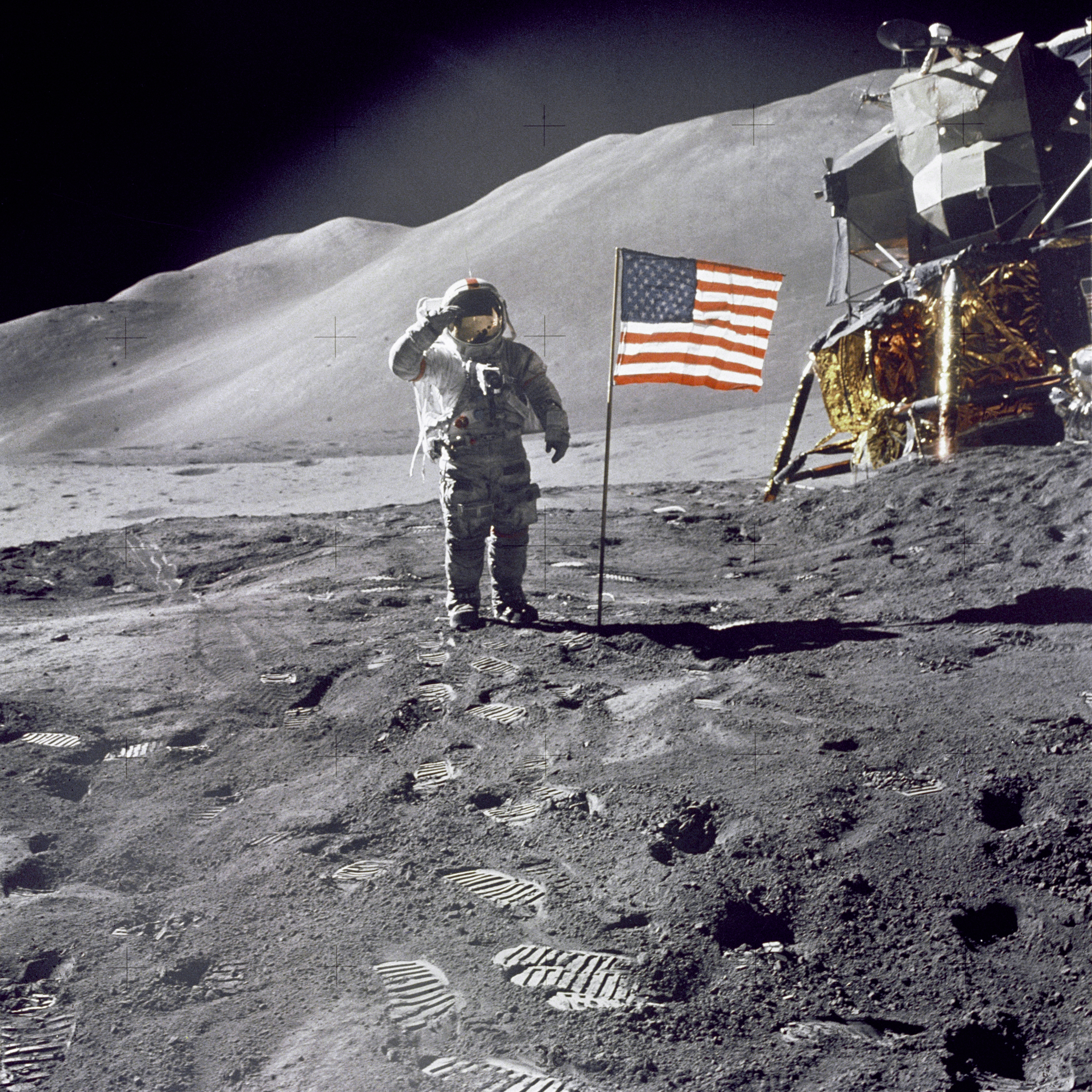
After months of hinting that a Lunar mission is in the works, US vice-president Mike Pence announced via The Wall Street Journal op-ed that NASA would be sending humans to the moon. The article was published just before the first National Space Council meeting was to be held, with Pence at the head. Based on the comments made, the Trump administration seems particularly eager to make something of this.
"We will refocus America's space program toward human exploration and discovery," the WSJ op-ed reads. "That means launching American astronauts beyond low-Earth orbit for the first time since 1972. It means establishing a renewed American presence on the Moon, a vital strategic goal. And from the foundation of the Moon, America will be the first nation to bring mankind to Mars."
As Ars Technica notes, the vice-president neglected to provide specifics with regards to how NASA will actually accomplish such a feat now that the majority of its rockets have been decommissioned. Several parts of the piece did hint that the agency will be counting on third-party support to make this administration’s ambitions a reality, such as the part about NASA needing to "look beyond the halls of government for insight and expertise."
By default, the only source of expertise that Pence could be talking about is private space companies such as SpaceX and Blue Origin. Of these two private firms, the former has shown the most promise in not only commercializing space flight but also achieving ambitious space missions with its reusable rockets.
With that in mind, it’s likely that while private companies and pioneers like Elon Musk will do the heavy lifting, VP Mike Pence and President Donald Trump will sit back and bask in the glory of their supposed accomplishments. This is if anything even comes of this project, as it will most likely require international support and will go through multiple administrations.