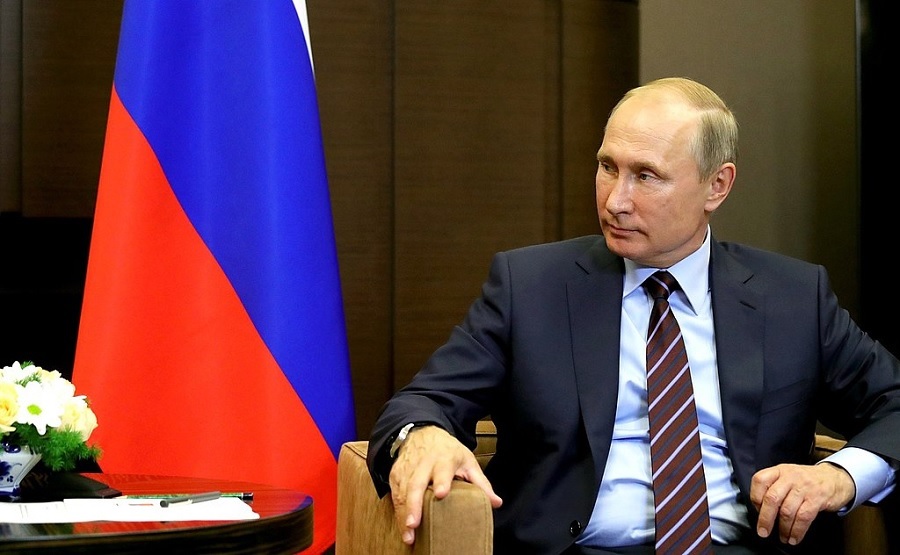
Russian President Vladimir Putin just signed a new law that would bring his country closer to having an internet network separated from the rest of the world. But critics deem this could be used to further intensify reported online censorship toward government critics.
The primary goal of the new law is to establish an online network that is practically exclusively accessible in Russian territories, thus, calling it “sovereign internet.” Putin’s government also explained that once this has been established, the country will have a greater fighting chance against cyber attacks from outside players.
With the new law only being signed by Putin last Wednesday, particularities in its implementation are reportedly not available yet. But, per local news sources (via Business Insider), the Russian government aims to be independent from the worldwide internet network by establishing their own domain name system (DNS).
Putin’s administration’s direction on policies over online activities has consistently been under scrutiny. But in early April, TASS reported that the Russian president said at the Tenth Russian Internet Governance Forum that he wants to preserve the freedom online. "At the same time, it is also important to counter the risks and challenges of cybercrime and the spread of illegal content, which poses a threat to people’s rights and the state’s interests," he added.
Not surprisingly, the new law was met with criticisms. Anti-cyber censorship advocate Filipp Kulin told the New York Times, “This is direct censorship.” He also raised his concern that Putin’s law would replicate the current situation in China where the country’s firewalls have been prohibiting its citizens to access many non-Chinese websites.
Meanwhile, it can be recalled that in March Putin also signed a new law that bans the spread of fake news and criminalizes posting insults toward the government and public officials online. It was immediately put to test when a man was fined 30,000 Rubles, or more than $400, for allegedly calling Putin a “f***wit” in a local social media platform.