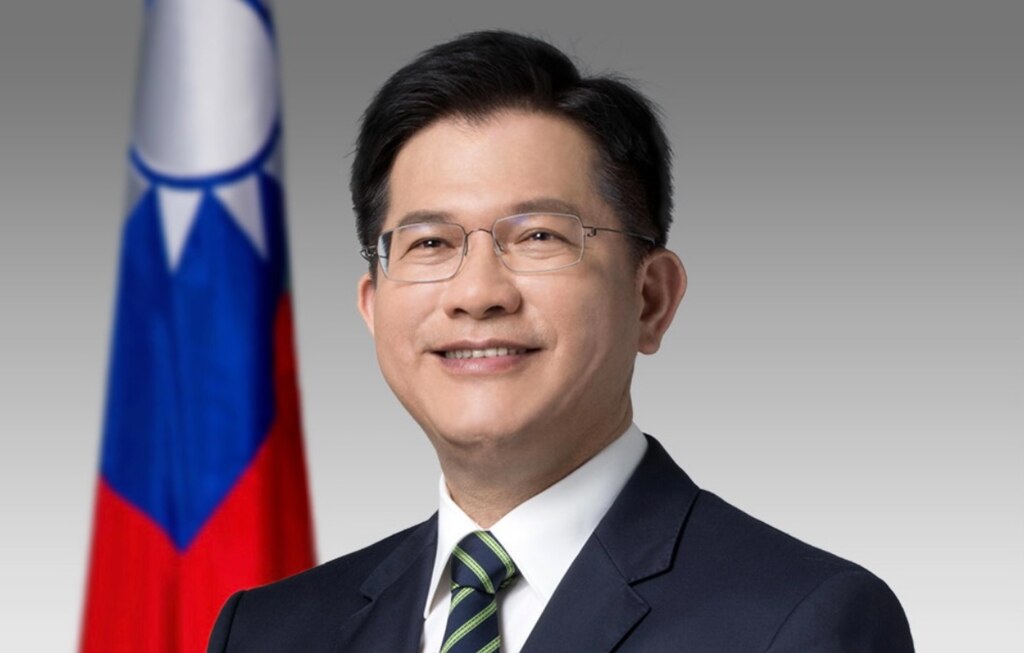
Taiwan’s Foreign Minister Lin Chia-lung has arrived in Eswatini, reaffirming Taipei’s determination to expand its global presence despite alleged interference from China. His visit comes shortly after Taiwan accused Beijing of pressuring African nations to deny airspace access to President Lai Ching-te, forcing the cancellation of a planned diplomatic trip.
According to Taiwan officials, Seychelles, Mauritius, and Madagascar withdrew previously granted overflight permissions for Lai’s aircraft, marking an unprecedented situation where a Taiwanese president had to cancel an overseas visit entirely due to restricted airspace. The move has raised concerns about what Taipei views as a growing strategy by China to limit Taiwan’s international engagement and diplomatic outreach.
Lin Chia-lung shared his arrival in Eswatini on social media, posting an image of himself stepping off a private jet. In his message, he emphasized the strong diplomatic ties between Taiwan and Eswatini, one of the island’s remaining 12 formal allies. He stated that Taiwan would not be deterred by “authoritarian forces” and remains committed to participating on the global stage.
Despite Taiwan’s accusations, China denied exerting pressure on the African nations but expressed approval of their decisions to block the flight permissions. Beijing continues to assert that Taiwan is part of its territory and has no authority to act as a sovereign state internationally. Taiwan, however, firmly rejects these claims, maintaining its right to conduct foreign relations and engage with global partners.
Lin traveled to Eswatini as a special envoy representing President Lai at celebrations marking the 40th anniversary of King Mswati III’s accession. While details of the journey remain limited, Lin noted that his delegation successfully “overcame all obstacles” to reach the country.
The situation has drawn international attention, with the United States, European Union, United Kingdom, France, and Germany expressing concern over China’s actions. The incident highlights escalating tensions in cross-strait relations and underscores the geopolitical challenges Taiwan faces in maintaining its diplomatic presence worldwide.