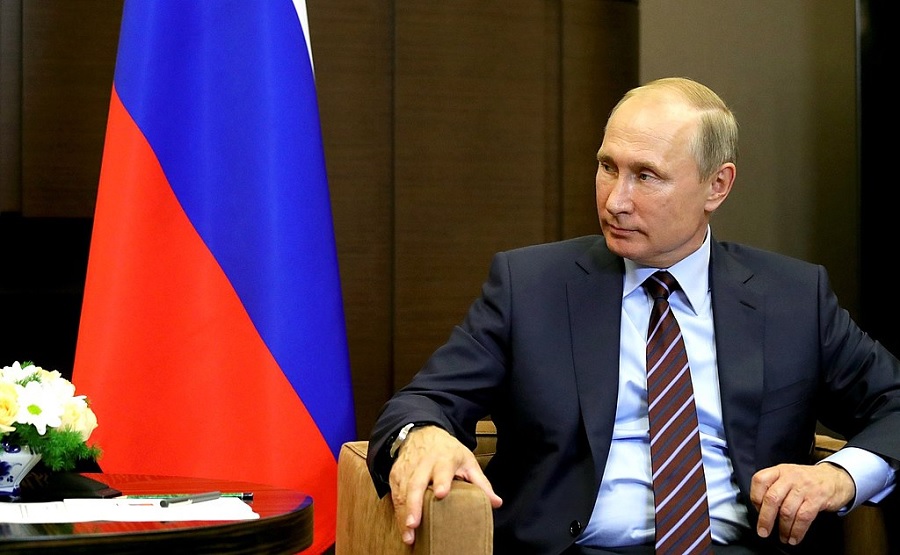
Russian President Vladimir Putin recently stated they have ample nuclear weapons developed and ready to be deployed if needed. A few days later, a state-run TV news outlet elaborated this statement and listed several United States military facilities as potential targets.
Putin’s latest threats came out a few weeks after the U.S. ultimately withdrew from the Cold War-era nuclear arms control agreement called the Intermediate-Range Nuclear Forces (INF) Treaty signed in December 1987. “If they create threats to us, they should be aware of the potential consequences, so that they will not accuse us of unnecessary aggressiveness or whatever later,” Putin said in a Feb. 20 Russia's Federal Assembly event (via Ars Technica).
U.S. State Secretary Mike Pompeo announced on Feb. 1 that the country is officially backing out of the INF Treaty. He said the U.S. is merely responding “appropriately” after accusing Russia of violating the terms of the agreement “without remorse” for several years.
At the same state affair, Putin specified some of Russia’s latest nuclear weapons developed and reportedly said they would target submarines and ships armed with nuclear missiles first. The Russian president further explained they have a nuke that can reach its target “at a speed of Mach 9” or more than 10,000 kilometers per hour.
Putin added, “Do the maths. The distance of 1,000 kilometers at Mach 9. How soon, in how many minutes, can these weapons reach their targets? … How long would it take to reach the decision-making centers that are creating threats to us? The calculation is not in their favor, at least, not today."
Then, earlier this week, news anchor Dmitry Kiselyov followed up on Putin’s statements through a special segment in their TV program. Kiselyov mentioned the Pentagon and the U.S. President retreat estate Camp David in Maryland as possible targets.
Meanwhile, Putin also reiterated they have no intentions or plans to actually deploy their nukes at the moment. However, he implied they are ready to overturn that once the United States deploys its own weapons and reach European territory.