

When you think about the big beneficiaries of trade unionism, professional football might not immediately spring to mind. But, according to one observer, writing in The Guardian, it is “in British professional football that we find one of the most successful examples of modern trade unionism”.
The article puts this down to 100% membership of the Professional Footballers’ Association (PFA) and the association’s success in collective bargaining. Membership of the PFA provides players with a variety of benefits including sickness arrangements and post-retirement obligations. It allows all professional footballers to be subject to the same rules – regardless of the club they play for.
But is the PFA any match for the increasing commercialisation and globalisation of football? What happens if domestic games are exported and played overseas?
It has now been confirmed that, for the first time ever, a La Liga game will take place outside of Spain. Barcelona are due to play Girona in Miami, Florida in January 2019 as part of a partnership between the top flight of Spanish football and US media company Relevent.
The decision, which will no doubt generate large sums in television rights, suggests a lack of power from the Spanish players’ union, the AFE (Asociación de Futbolistas Españoles). The AFE was openly against the move and stated that players’ opinions over the issue had been ignored (it has now insisted the players will have the final say). The organisation argued that Spanish football is not just about money, that footballers should not be treated as “bargaining chips” and that fans “deserve respect”. Neither has strike action been ruled out, though only as a last resort – and potentially without all clubs on board.
There are also serious questions about the process which led to the decision. Carlos Suarez, the president of newly promoted Real Valladolid, said there had been no consultation with clubs. This decision represents what is likely to be but the first step towards a rethinking of football league fixtures. And it does not bode well for the PFA in the face of a similar venture.
Football further from home
In the UK, talk of a “39th game” – an extra round of Premier League matches (added to the usual 38 games played by each club in a normal season) to be played at neutral venues around the globe came in 2008.
The PFA’s aims are to “protect, improve and negotiate the conditions, rights and status of all professional players by collective bargaining”. The subject of “Game 39” provided the opportunity to put these aims into practice.
Dubbed “Gam£ 39” by the Football Supporters’ Federation (FSF), due to their view of the scheme as being purely motivated by money, the proposal divided opinion. On the side of the dissenters, Gordon Taylor, then chief executive of the PFA, expressed concerns about the added pressure on teams. While the move would make commercial sense, in terms of ticket sales and broadcasting income, it would not necessarily be in the best interests of players. For the time being the idea was shelved.
But after La Liga’s decision to opt for an overseas league fixture, for the ostensible purpose of catching up commercially with the Premier League, will the “39th game” debate be reignited?
Worrying signs. Shutterstock
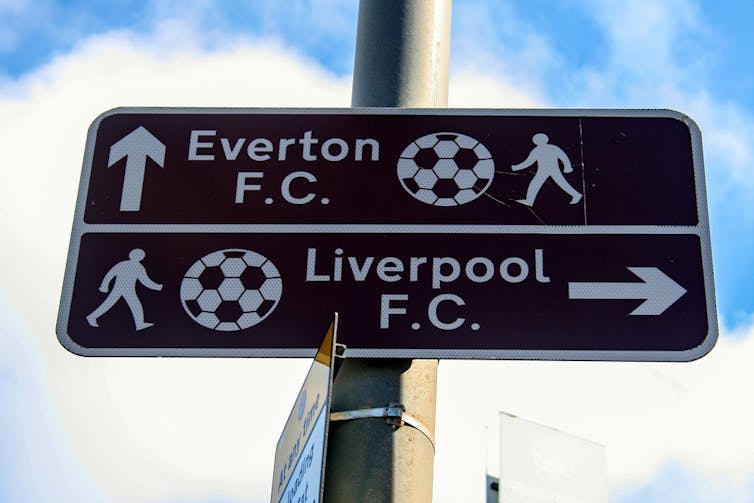
One key component in this is the fans who turn out every week – often at considerable expense – to watch their team play their home league games. Football clubs are historical entities rooted in place. A tour of Athletic Bilbao’s history museum reveals the weight of place and history on the club’s identity. I doubt there is much appetite for exporting home fixtures outside the Basque Country. Similarly in the UK, the idea of watching a prized Merseyside derby fixture away from either Anfield or Goodison Park would, I’m sure, be a bizarre suggestion to most fans.
Of course, La Liga is not talking about relocating clubs like Barcelona across the Atlantic. At present we are talking about just one game of football in a season – but what if it becomes two, or three or four?
After all, clubs appear to have less and less need of their fans. Some are able to turn over a considerable profit even in an empty stadium. Why would’t owners be tempted to break into another market if it means increasing profit margins?
Predictably, Stephen Roos, the chairman of Relevent, sees the venture as the next step in growing football’s popularity in North America. La Liga president, Javier Tebas commended the “ground-breaking agreement”.
On the other side, fans and players hold serious reservations about uprooting domestic league games, both in terms of holding on to the clubs’ local integrity, player welfare, and access for supporters.
As arguments continue over the controversial step taken by La Liga, we wait to see if the Spanish decision prompts fresh calls for a 39th game in English domestic football – and whether the PFA and the fans have the tactics to secure a home win.

