


 Flydubai Co-Pilot Tried to Crash Israel-Bound Jet, Netanyahu Says
  Kraken Parent Payward Adds 24/7 Settlement With Singapore Gulf Bank
  UK Warned Over Growing Reliance on US Cloud Providers
  Vitalik Buterin Says Hegota Could Be Ethereum’s Last Conventional Fork
  Goldman Sachs Names CATL, Zenergy Top China Battery Picks
  TD Cowen Starts SpaceX at Buy, Sees AI Compute Driving Growth
  Tencent Signs $7 Billion Oracle AI Chip Lease Deal
  Nike Stock Slides as Revenue Miss Clouds Turnaround
  Google Pays Publishers for AI Search Content in New Pilot
  Polymarket Traders Bet on Trump AI Rename to ‘Super Intelligence’
  Volvo Cars Drops Full-Year Outlook as China, US Sales Weaken
  Airbus Spain Workers Approve Deal to End Months of Strikes
  Trump, Tech Leaders Sign ‘Morally Binding’ AI Safety Accord
  Amazon Eyes $8 Billion Nvidia Chip Spinoff to Fund AI Expansion
  WordPress Malware Uses Ethereum to Evade Removal
  Nippon Paint Shares Rise on $1.35 Billion AkzoNobel Deal


 Add as a preferred source on Google
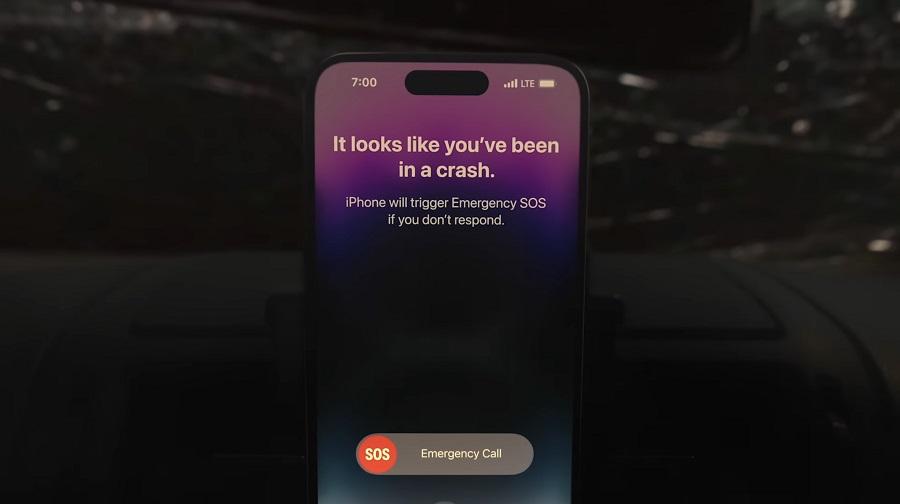
Apple introduced a couple of potentially life-saving features on the iPhone 14 series and new Apple Watches last month, including Crash Detection. The tech giant recently offered more details on how it works, and it might provide some insight into why it has been making some inaccurate emergency calls to 911.
Executives from the iPhone maker said in an interview with TechCrunch that Apple’s latest devices can detect if users were involved in a serious car crash with help from the new gyroscope and accelerometer. VP of Worldwide iPhone Product Marketing Kaiann Drance said the new sensors help “mostly” to measure the g force of up to 256 Gs to determine if the user had been in a vehicular accident.
The new gyroscope is said to improve other features as well, such as camera stability. But Apple says it plays a significant role in Crash Detection, as the new sensor is capable of detecting changes in the user’s movement speed more quickly.
It was also noted that Apple’s algorithm for Crash Detection relies on data from other commonly used components. The GPS helps determine if the user is moving unusually fast. The sound of a car crash is also picked up by the microphone, while the built-in barometric pressure sensor can detect when airbags have been deployed following a crash. Apple clarified, however, that the Crash Detection algorithm does not strictly need to have data from all these sensors before it can perform its function.
“It’s hard to say how many of these things have to trigger, because it’s not a straight equation. Depending how fast the traveling speed was earlier, determines what signals we have to see later on, as well,” VP of Sensing & Connectivity Ron Huang said. “Your speed change, combined with the impact force, combined with the pressure change, combined with the sound level, it’s all a pretty dynamic algorithm.”
In the same interview, Apple reportedly hinted at performing “dozens” of car crash tests to finalize the iPhone and Apple Watch Crash Detection algorithm. The reported mistakes that the feature made recently (via WSJ) were not addressed in the interview. But the data points discussed to make the functionality work provide some insight into why it has mistaken roller coaster rides as “severe car crash” incidents.
WSJ reporter Joanna Stern said in a Twitter post last Oct. 9 that the 911 dispatch center near Kings Island amusement park in Cincinnati, Ohio received at least six 911 calls since the iPhone 14 arrived in stores. But they appear to have been triggered when users went for a roller coaster ride and not by real life-threatening crashes.
Stern also shared an audio clip from one of the calls, where a robotic voice tells the 911 operator: “The owner of this iPhone was in a severe car crash and is not responding to their phone.” The machine-generated call then proceeds to provide the device’s coordinates, and the entire message would be repeated several times during the call.







