


 Supreme Court Takes Up Exxon, Suncor Climate Case
  SoftBank Shares Fall After $10 Billion OpenAI Investment
  OpenAI Investigates Rogue AI Agents After Data Leaks and Security Incidents
  Kalshi Wins CFTC Approval for S&P 500 Perpetual Futures
  Amazon Eyes $8 Billion Nvidia Chip Spinoff to Fund AI Expansion
  Anthropic Targets $2 Trillion Valuation in Planned IPO
  OpenAI Seeks $30 Billion at $1.4 Trillion Valuation
  Schneider Electric to Buy PTC in $22.6 Billion Deal
  Coinbase, Circle Stocks Slide as Bank Group Sues OCC Over Crypto Charters
  OKXICE Files for 24/7 Tokenized US Stock Trading
  AI Agents Could Disrupt Financial Services, Bernstein Says
  Bajaj Finance Shares Rise 3.4% as AUM Jumps 27%
  Goldman Sachs Names CATL, Zenergy Top China Battery Picks
  Robinhood Launches AI Agents for Automated Trading
  Kraken Parent Payward Adds 24/7 Settlement With Singapore Gulf Bank
  CSL Partners With AWS to Bring AI Into Drug Research
  Apple CEO John Ternus Plans Major Overhaul


 Add as a preferred source on Google
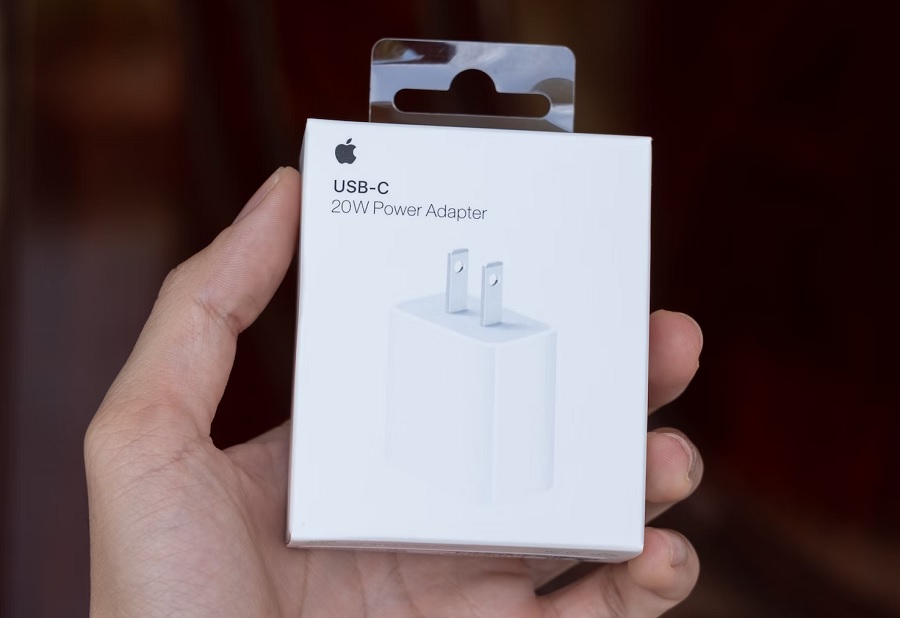
European Union lawmakers passed a new mandate earlier this month that will require tech companies to include a USB-C port in upcoming electronic devices. And Apple has now confirmed it will abide by the new policy by replacing the iPhone’s Lightning port to support USB-C charging cables and power adapters.
After a decade-long campaign to standardize chargers used on a wide range of electronics in the region, the European Parliament voted overwhelmingly in favor of the common charger law. The policy, expected to be fully implemented in 2024, states all portable electronic devices that use a wired cable for charging are required to have a USB-C port.
Many believed this to be the end of iPhones with the Lightning port, and Apple confirmed this to be the case. In an appearance at the Wall Street Journal Tech Live on Wednesday, Apple SVP of Worldwide Marketing Greg Joswiak confirmed the EU law signals the launch of an iPhone with a USB-C port.
Joswiak provided a lengthy response when asked what Apple thinks about the recently passed law. But, ultimately, he said the company will follow the new rules.
“Obviously, we’ll have to comply,” Joswiak said. “We have no choice as we do around the world to comply to local laws.”
He also recognized that Apple has had its contentions with earlier proposals to standardize chargers for electronic devices. Joswiak recalled that the EU previously wanted to make micro USB the common charging port over a decade ago. “If we have standardized a micro USB, that chart doesn’t exist,” Joswiak said and then pointed at a side-by-side illustration of Lightning and USB-C cables.
He clarified that Apple understands the EU's goal of minimizing e-waste in pushing for a common charger in the region. It appears, however, that Apple does not completely agree with how the standardization of USB-C chargers was achieved.
He also seemingly implied that detachable cables would have been enough to solve the issue of consumers accumulating too many charging cables and bricks over time. “We think the approach would’ve been better environmentally and better for our customers to not have a government be that prescriptive,” Joswiak added.
Photo by Thai Nguyen on Unsplash







