


 Trump Defends Russian Diesel Deal Amid US Sanctions Backlash
  Trump Warns Houthis Over Attacks, Considers Erdogan Intervention
  Trump Denies China, Russia Are Helping Iran in War
  Flavio Bolsonaro Backs Brazil’s 40-Hour Workweek Reform Ahead of Runoff
  US Recalls Nicaragua Envoy After Ambassador Rejection
  Trump Announces Russia-Ukraine Energy Ceasefire as Zelenskiy Awaits Details
  Mahmoud Abbas Postpones Palestinian Elections to September 2027
  Trump Plans White House Shake-Up of Key AI Safety Agency
  Trump Denies Russia and China Are Helping Iran in U.S. Conflict
  Trump Sanctions International Criminal Court, Sparking EU Backlash
  Jordan Bardella Antisemitism Allegations Threaten Le Pen’s Campaign
  North Korea Fires Ballistic Missiles Amid Rising Tensions With South Korea
  Zelenskiy Says Ukraine Received No Warning Before Russian Missile Attack
  India Voter List Protests Reach Supreme Court as Opposition Demands Election Chief's Resignation
  Kim Jong Un Showcases ICBM Ahead of Possible Trump Meeting
  Greenland Lawmakers Back Trump Security Deal Despite Economic Concerns
  US Authorities Raid Ilhan Omar’s Home Amid Immigration Fraud Probe


 Add as a preferred source on Google
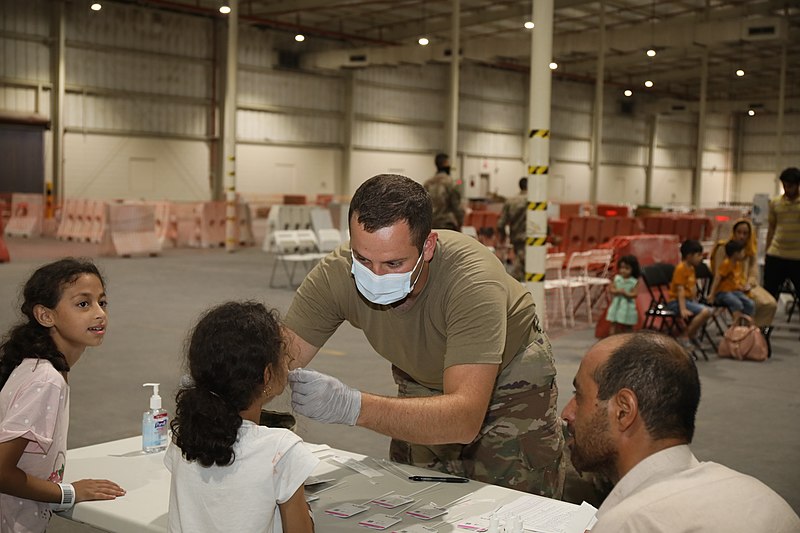
This week, the Taliban-backed government has announced a vaccination drive for polio. The campaign would be targeting 9.9 million children under five years in Afghanistan.
The Afghan Public Health Ministry announced Monday that it would be launching a polio vaccination campaign to administer polio vaccine doses to over 9.9 million children under five years old in Afghanistan. The initial campaign would take place for two weeks, with the first week covering 21 of 34 provinces, according to the ministry. The campaign has the backing of UNICEF and the World Health Organization.
“The campaign is the last polio vaccination drive in 2021. It will continue in two weeks. This week it will cover 21 of Afghanistan’s 34 provinces. The next drive will cover 13 provinces of Kandahar, Helmand, Nimroz, Zabul, Uruzgan, Nangarhar, Kunar, Nuristan, Laghman, Ghazni, Paktika, Balkh, and Ghor,” said the ministry in a statement.
Back in November, UNICEF launched a polio vaccination drive that aimed to administer doses to 3.3 million children in Afghanistan. In the years of Afghanistan’s western-backed government, vaccination campaigns were successful. But as the insurgent group was regaining power in the past three years, door-to-door polio vaccinations were banned.
Afghanistan and Pakistan are the only two countries where polio is endemic.
Meanwhile, the Taliban is committed to meeting the reforms asked by the international community as it seeks to gain recognition as Afghanistan’s government. The insurgent group has looked to present a more moderate approach breaking from its previous hardline conservative stances years back as it also seeks help for the Afghan citizens in need.
Afghanistan’s Foreign Minister Amir Khan Muttaqi told the Associated Press that the insurgent group wants to have good relations with all countries and that it has no issue with the US. Muttaqi also urged Washington and other countries that hold Afghanistan’s reserves to free at least $10 billion in funds, saying that any sanctions against Afghanistan would not benefit anyone.
“Making Afghanistan unstable or having a weak Afghan government is not in the interest of anyone,” said Muttaqi, who also acknowledged the limits on education and workforce that the group has imposed on women and girls since taking control of the country in August.







