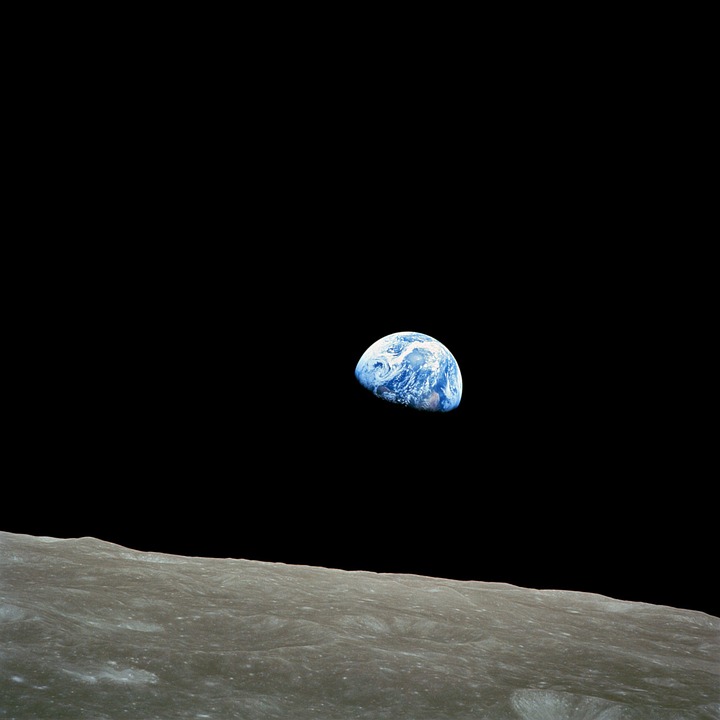
Buzz Aldrin, along with Neil Armstrong, made history in 1969 as the first men on the moon. However, apart from the historical moment of stepping onto the surface of the moon, Aldrin recalled seeing other things while in space.
Express reports that Aldrin remembered seeing mysterious flashing anomalies while in space from the cabin. Aldrin revealed this during the debrief when they returned to Earth, where they were given a hero’s welcome. This moment was not published but was only later uncovered during the NASA’s Unexplained Files program back in 2014. As to what those flashing lights were, have yet to be determined, but it is likely it would remain a mystery for some time.
Aldrin was not the only one who recalled seeing flashes of lights while in space. Months later, during the Apollo 12 mission, astronaut Alan Bean also experienced seeing flashes of light while on the surface of the moon. “The first time I saw them I was on the backside of the Moon and looking down at a crater and I saw a flash. I thought, ‘did I really see a flash?’ because there’s nothing going on down there,” said Bean.
Dr. Story Musgrave, also a former astronaut, described the anomaly as something similar to fireworks on the fourth of July. But eventually, NASA was able to give an explanation to what the astronauts had seen, revealing that the lights were actually cosmic rays. These cosmic rays are high-energy particles that pass through space at a speed of light.
In a 2019 interview, Michael Collins, who piloted the command lunar module as Aldrin and Armstrong carried out their experiments on the Moon, shared that he had some regrets, most especially as he would have most likely followed his Apollo 11 colleagues into being the next man on the moon. Collins retired from NASA in 1970, one year after the historic mission, and the former astronaut explained that he felt like he served his purpose with NASA at that time, which prompted him to decide to leave.
Collins shared that although he did have some regrets, he felt that his luck had run its course. He added that he was content with his decision and thus did not feel a great sense of regret later on.