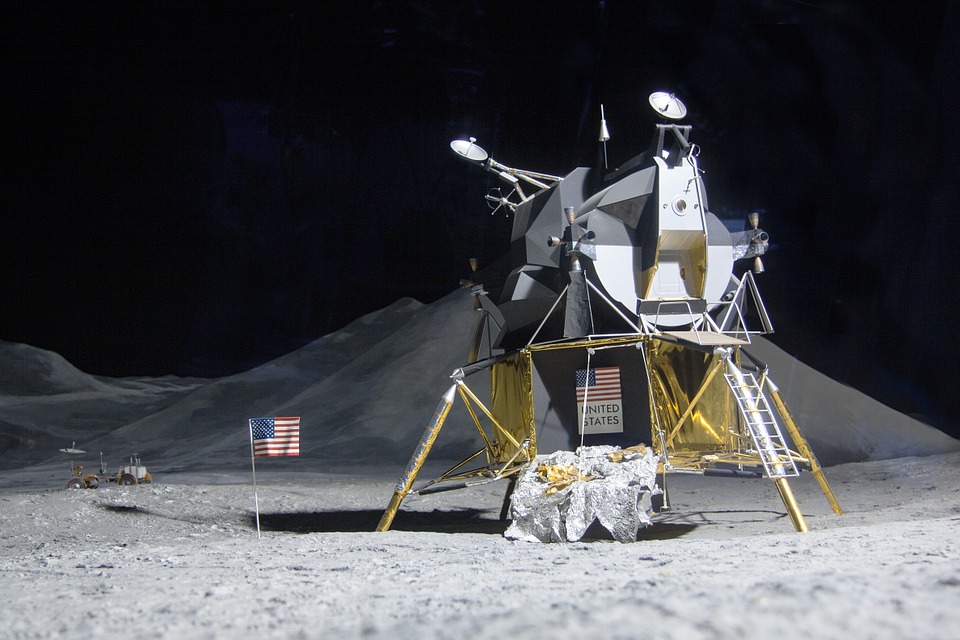
The historic Apollo 11 mission in 1969 was a collaborative effort between the scientists, engineers, and technicians in putting astronauts Neil Armstrong and Buzz Aldrin onto the moon. Among those was Ian Fleming, the famed author who created James Bond.
Express reports that Edward Abel Smith, author of the book “Ian Fleming’s Inspiration,” revealed how Fleming was involved in the Apollo 11 mission. Smith detailed that the author’s involvement was accidental. “He set up a group of commandos which were called the 30 Assault Unit and his case for this was that the Nazis had a similar intelligence-gathering group,” shared Smith.
Smith added that knowing that the Nazis had a similar group trying to search and destroy all information as they could, including the equipment used, Fleming thought the Naval intelligence likely had something similar as well. At the time, Fleming made a proposal for a Naval Intelligence Commando Unit back in 1942.
However, Smith recalled that Fleming had another reason for wanting to go into Normandy during the war. Fleming wanted to retrieve the design and technology used in the V1 and V2 rockets - made by Nazi engineer Werner von Braun, which was responsible for the death of his then-girlfriend Muriel Wright, who was killed by shrapnel from a V1 bomb. Apart from uncovering the designs, the unit also saw what the V1 launch site looked like, and later found the V2 rockets. The team Fleming led arrested one of the top scientists in the V2 rocket project Hellmuth Walter, who would lead them to a goldmine of documents on the rocket designs at Tambach Castle close to Nuremburg.
Meanwhile, decades later, astronaut Michael Collins, who piloted the Command Module during Apollo 11, admitted that they were aware that the whole world was watching them. Collins shared back in 2019 that they were aware of the burden on their shoulders to succeed in the mission and knew that so many things could go wrong but making a mistake was not an option.
“We felt that the eyes of the world were upon us, it was something that we had every opportunity to mess up, to make a mistake. We were, well at least I was, uptight in that regard, I was trying to do everything exactly as I had been trained to do. I knew that if I messed up somehow, there would not only be national, but international repercussions because of that,” recalled Collins.