


 NASA's Artemis II Mission: First Crewed Lunar Journey Since Apollo
  Trump Administration Releases New UFO Files and Apollo Mission Records
  Neuralink Plans High-Volume Brain Implant Production and Fully Automated Surgery by 2026
  Trump and Merck KGaA Partner to Slash IVF Drug Costs and Expand Fertility Coverage
  Blue Origin’s New Glenn Achieves Breakthrough Success With First NASA Mission
  FDA Adds Fatal Risk Warning to J&J and Legend Biotech’s Carvykti Cancer Therapy
  SpaceX Delays Starship V3 Launch Ahead of Potential Record IPO
  SpaceX’s Starship Completes 11th Test Flight, Paving Way for Moon and Mars Missions
  Trump Administration to Launch Autism Initiatives Targeting Acetaminophen Use and New Treatment Options
  Trump Signs Executive Order to Boost AI Research in Childhood Cancer
  China vs. NASA: The New Moon Race and What's at Stake by 2030


 Add as a preferred source on Google
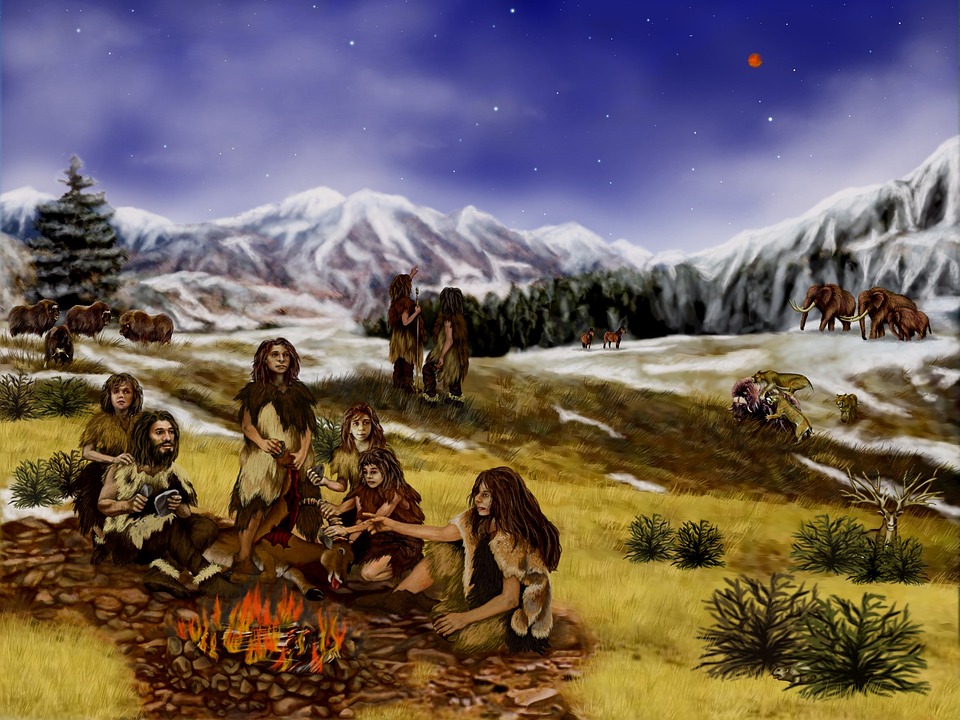
The advances in technology, especially when it comes to hunting or processing animal carcasses for food has come a long way since the beginning of mankind’s evolution. Archaeologists were able to uncover ancient weapons that date back to 300,000 years ago.
Express reports that archaeologists found what seemed like a collection of the earliest weapons that were used to hunt animals in a coal mine in northern Germany. They found nine ancient spears, as well as the remains of horses and elephants that date all the way back to 300,000 years ago. According to the researchers, based on the estimated date of the spears, these were likely used by the neanderthals.
If that was the case, then this find would touch on the theory that the earliest humans were scavengers. It also means that man’s hunting abilities came in earlier than previously believed. “The former Schöningen open-cast mine is a first-rate archive of climactic change. This must be made even clearer in the future. This is a place where we can trace how humankind went from being a companion of nature to a designer of culture,” said Björn Thümler, the Minister of Science of Lower Saxony.
Jordi Serangeli, who led the excavation revealed that the hunters during the Stone Age likey cut the meat, tendons, and fats of the animals they hunted out from the bones. Serangeli added that there is a chance dangerous elephant hunting may have occurred at the time, which would be confirmed by archaeozoologist Ivo Verheijen after analyzing the remains that were found.
Onto more discoveries, back in 2016, a teenager claimed to have discovered a lost Mayan city through the use of Google Maps. 15-year-old William Gadoury from Quebec made the discovery using star charts as well as satellite images, finding one of the biggest Mayan settlements that had ever existed.
According to Gadoury, the location of Mayan cities may have corresponded with stars in Mayan constellations. Analyzing 22 Mayan star maps and overlaying each one on satellite photos of the Yucatan peninsula, it showed that 117 Mayan cities matched the positions, the brightest stars corresponding to major areas. A 23rd constellation, three stars of which correlated to two of the ancient cities, led him to believe that the third star which would be on the Mexico-Belize border, could be a lost city, now referred to as K’aak Chi, meaning Fire Mouth.







