


 Jared Isaacman Confirmed as NASA Administrator, Becomes 15th Leader of U.S. Space Agency
  Blue Origin New Glenn Explosion Could Delay Launch Operations Until 2028
  Trump and Merck KGaA Partner to Slash IVF Drug Costs and Expand Fertility Coverage
  China vs. NASA: The New Moon Race and What's at Stake by 2030
  Neuralink Plans High-Volume Brain Implant Production and Fully Automated Surgery by 2026
  SpaceX Prioritizes Moon Mission Before Mars as Starship Development Accelerates
  Blue Origin’s New Glenn Achieves Breakthrough Success With First NASA Mission
  FDA Adds Fatal Risk Warning to J&J and Legend Biotech’s Carvykti Cancer Therapy
  Trump Administration Releases New UFO Files and Apollo Mission Records
  SpaceX’s Starship Completes 11th Test Flight, Paving Way for Moon and Mars Missions


 Add as a preferred source on Google
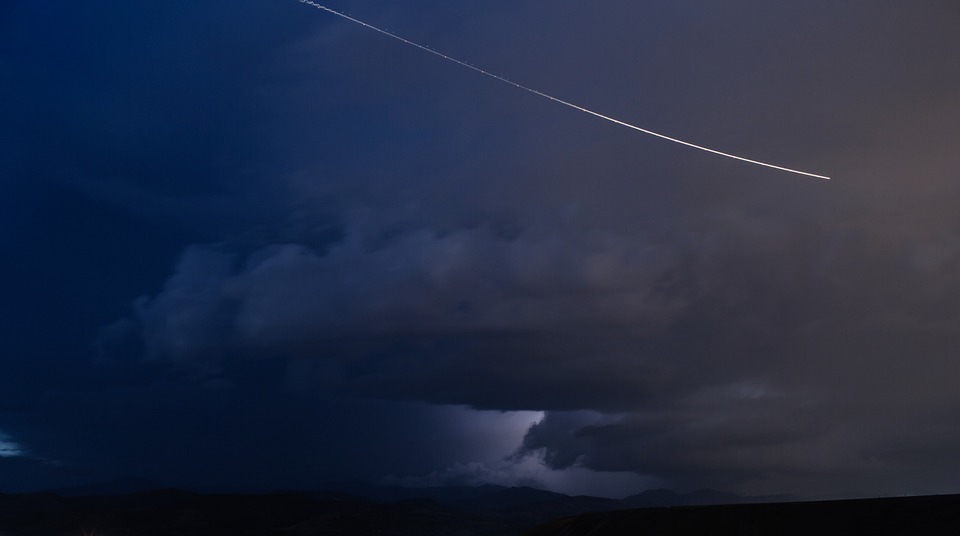
Asteroids fly by Earth on a regular basis, and some even come into contact with the atmosphere. Back in February, residents in Canada witnessed a fireball explode in the sky, producing a bright flash as it disintegrated.
Express reports that over 60 people in Canada saw a giant fireball explode in the skies last February 10th. The explosion produced a bright flash of light, and some witnesses were able to record a video of the incident as the fireball left behind a green tail. Shortly after the incident, many reported what they saw to the International Meteor Organization, expressing their surprise as they had never seen such an occurrence before. One witness described it as a teal-colored falling star.
It should be noted that when asteroids and meteors come into contact with the atmosphere, resulting in an explosion of fire before burning up and disintegrating. This is because this would be the first time these space rocks met some kind of resistance, and thus air seeps into the cracks and crevices of the rock, causing it to explode. Because these asteroids and meteors exploded in the sky, these rocks would most likely be very small and unable to make it past the atmosphere.
However, because these rocks produced a bright flash just before disintegrating into nothingness, it means that space agencies need to keep tabs on what is happening beyond the planet. Even though the chances of an asteroid actually colliding into Earth are very slim, there is still a chance, and thus the need to constantly monitor for possible objects.
At the same time, the asteroid 1998 OR2 has been highly anticipated to pass by Earth, with astronomers on the lookout as it flies by. 1998 OR2 will get as close as 6.29 million kilometers away from Earth and measures somewhere between 1.5 and 4.1 kilometers in diameter. Thus, OR2 is classified as a potentially hazardous object or PHO.
The asteroid’s flyby will be live-streamed by the Virtual Telescope Project in Italy. According to Dr. Gianluca Masi, the size of the asteroid will make it visible enough to be seen through telescopes and make it bright enough as well when it approaches.







