


 SpaceX Delays Starship V3 Launch Ahead of Potential Record IPO
  Is space worth the cost? Accounting experts say its value can’t be found in spreadsheets
  NASA's Artemis II Mission: First Crewed Lunar Journey Since Apollo
  Blue Origin’s New Glenn Achieves Breakthrough Success With First NASA Mission
  SpaceX Pivots Toward Moon City as Musk Reframes Long-Term Space Vision
  Trump Administration to Launch Autism Initiatives Targeting Acetaminophen Use and New Treatment Options
  Cogent Biosciences Soars 120% on Breakthrough Phase 3 Results for Bezuclastinib in GIST Treatment
  SpaceX Prioritizes Moon Mission Before Mars as Starship Development Accelerates
  China vs. NASA: The New Moon Race and What's at Stake by 2030
  Trump and Merck KGaA Partner to Slash IVF Drug Costs and Expand Fertility Coverage
  SpaceX’s Starship Completes 11th Test Flight, Paving Way for Moon and Mars Missions
  Blue Origin New Glenn Rocket Explodes During Launch Pad Test, Delaying Space Ambitions


 Add as a preferred source on Google
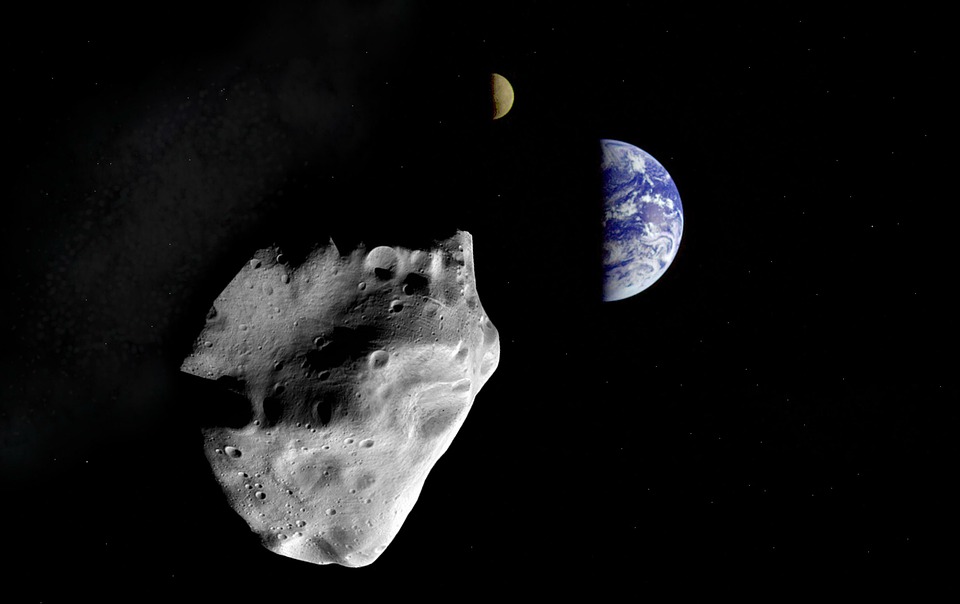
Space agencies all over the world are keeping tabs on one particular asteroid that is bound for Earth by April. Recent reports reveal that the asteroid in question is already on a close approach trajectory.
Express reports that the asteroid known as 1998 OR2 is already Earthbound, as astronomers are able to photograph the rock when their telescopes were able to pick up on the asteroid. OR2 is classified as a potentially hazardous object or PHO due to its size as it measures up to 1.8 to 4.1 kilometers in diameter. Should this asteroid collide with Earth despite very slim chances, the size of the asteroid could trigger disasters of a global scale, triggering calamities such as earthquakes and tsunamis - especially if it should hit the water.
OR2 is expected to approach Earth by the latter part of April, only getting as close as 6.29 million kilometers from Earth on that day.
According to astronomer Dr. Gianluca Masi of Italy’s Virtual Telescope Project, asteroid OR2 was already spotted 25 million kilometers away from Earth as of last week, March 24th. Space enthusiasts and amateur astronomers can catch a glimpse of the asteroid passing by Earth on that day as Dr. Masi will be streaming the event. “When we imaged it, Asteroid 1998 OR2 was about 25 million kilometers from us. This 1.8 to 4.1 kilometers large asteroid will come as close as 6.3 million kilometers from us next April 29 - more than 16 times the average lunar distance: It will not hit us - becoming bright enough to be seen with modest optical equipment,” said Dr. Masi.
Meanwhile, US agency NASA has recently tracked another asteroid, now known as 2020 FW5 following the confirmation last week on the 25th of March. It was predicted that the asteroid flew by Earth over the weekend, and was classified as a Near-Earth Object or NEO. NASA has also revealed that the size of the asteroid does not make it a threat and even in case it should decide to collide with Earth, it would only burn up when it reaches the atmosphere. The asteroid only got as close as 0.02387 astronomical units which were equivalent to 3.57 million kilometers.







