


 NASA Resumes Cygnus XL Cargo Docking with Space Station After Software Fix
  NASA Artemis II: First Crewed Moon Mission Since Apollo Takes Four Astronauts on 10-Day Lunar Journey
  Trump Signs Executive Order to Boost AI Research in Childhood Cancer
  SpaceX Prioritizes Moon Mission Before Mars as Starship Development Accelerates
  Blue Origin’s New Glenn Achieves Breakthrough Success With First NASA Mission
  Trump Administration to Launch Autism Initiatives Targeting Acetaminophen Use and New Treatment Options
  Trump and Merck KGaA Partner to Slash IVF Drug Costs and Expand Fertility Coverage
  Neuralink Plans High-Volume Brain Implant Production and Fully Automated Surgery by 2026
  Is space worth the cost? Accounting experts say its value can’t be found in spreadsheets
  Blue Origin New Glenn Explosion Could Delay Launch Operations Until 2028


 Add as a preferred source on Google
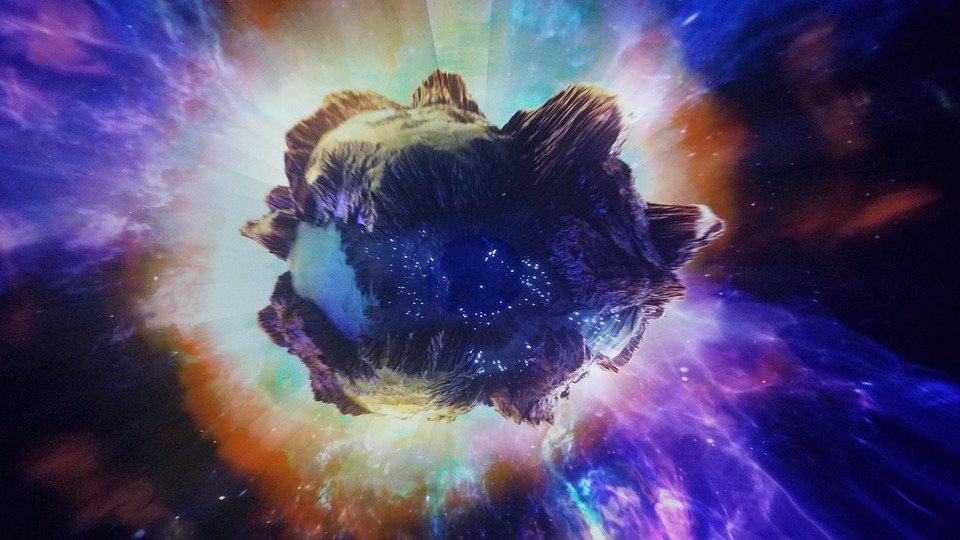
Asteroids are among the objects many can see in space, and many of them approach the planet, passing by the Earth’s orbit and into other parts of the Solar System. A new report reveals that asteroids actually explode as its host stars die.
According to Popular Science, the space rocks with host stars wind up exploding when its star goes through the process of dying. When stars are dying, like what the Sun will be in the very far future, they go through a red giant phase and then shrink down into a white dwarf. It is in this white dwarf phase that they expel a lot of light and energy, and this light, when shone on the asteroids, will send the rocks spinning until it explodes into smaller debris made up of dirt and possibly traces of iron if the asteroid is “dirty.”
Those so-called dirty asteroids would be filled with iron or other kinds of metals that, when it explodes, leaves streaks when they hit the dying star before collapsing. As to why asteroids end up fragmenting when exposed to the cosmic energy radiating from these dying stars, it is down to their shapes and how they end up interacting with light. Because the asteroids are oddly shaped, they interact with light differently, sending the light and energy in various directions within the rock, and they start to spin until they ultimately explode. This is known as the YORP effect, named after the four scientists who explained this phenomenon: Yarkovsky, O’Keefe, Radzievskii, and Paddack.
Meanwhile, a group of international researchers was able to take a closer look into the asteroid known as Pallas. They conducted a study to be able to identify the size and shape of this space rock, and now it appears that they have the answer. They found that Pallas, named after the Greek goddess of wisdom Pallas Athena, actually resembles a golf ball due to its heavily cratered surface.
As to why the asteroid looks the way it looks, the researchers believe that its inclined orbit causes this space rock to collide with other rocks in a span of four and a half years that it takes to rotate around the Sun.







