


 US-Led Coalition Targets Global Factory Overcapacity
  FxWirePro: Daily Commodity Tracker - 21st March, 2022
  Gold Prices Rise as Hormuz Tensions Fuel Inflation Risks
  Gold Prices Hit One-Week High as Oil Falls, Fed Rate Outlook Weighed
  Deutsche Bank CEO Urges Faster German Economic Reforms
  Bank of America Predicts Yen Rebound as USD/JPY Faces Risks
  Oil Prices Rise as Gulf Hurricane and Middle East Supply Risks Mount
  US Dollar Hits 18-Month High as Fed Signals More Rate Hikes


 Add as a preferred source on Google
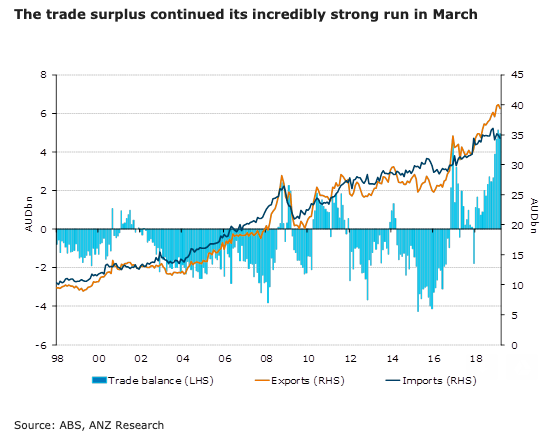
Australia’s monthly trade balance fell slightly to a surplus of AUD4,949 million in March. Underlying this was 1.8 percent fall in exports, while imports were down relatively less for the month. Nevertheless, this was the second highest surplus on record after the revised February surplus.
Resource exports fell 4.3 percent in the month, driven by a 12.2 percent decline in metal ores and minerals and non-monetary gold (which fell 31.0 percent) which was offset largely by a 15.8 percent increase in coal, coke and briquettes.
Rural goods rose 3.2 percent, led by increases in both meat and wool. Manufacturing exports were up 6.6 percent due to a 23.5 percent rebound in transport equipment. Service exports fell slightly, down 0.2 percent as travel decreased 0.3 percent.
Imports intermediate and other merchandise goods increased 1.9 percent m/m, largely due to a 11.7 percent increase in fuel imports. Much of this was likely due to higher prices. Imports of capital goods declined 5.3 percent m/m, led by transport equipment falling 26.4 percent and machinery and equipment dropping 9.7 percent.
Meanwhile, consumption goods imports fell 3.3 percent, driven by a 15.4 percent fall in car imports. Service imports also fell, decreasing 1.1 percent, primarily reflecting a 2.8 percent fall in travel.
"Taken together, the monthly trade data suggests a further positive contribution from net exports towards Q1 GDP and a possibly a close to flat current account for the quarter," ANZ Research commented in its latest report.







