


 US Dollar Rises for Fourth Week as Fed Rate Hike Bets Grow
  Oil Prices Trim Gains After Trump Rules Out Iran Strikes Before Midterms
  France to Release 10 Million Barrels of Diesel to Ease Fuel Prices
  Wall Street Falls as Fed Minutes Signal Another Rate Hike
  US Stock Futures Flat as Fed Minutes, Earnings Loom
  Dollar Near 18-Month High as Euro, Yen and Pound Weaken


 Add as a preferred source on Google
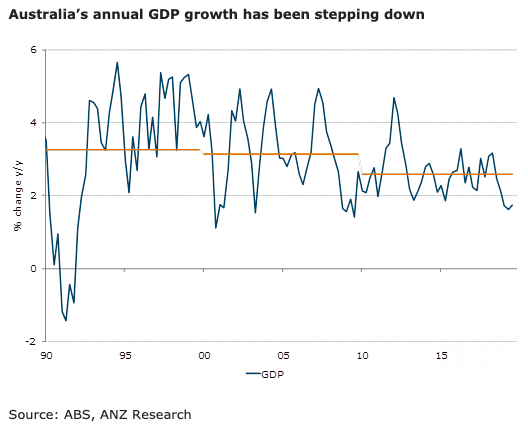
Australia’s trend rate of growth for the coming decade is expected to be somewhere between 2.0 percent and 2.5 percent per year, lower than the estimates from the Australian Treasury and the Reserve Bank of Australia (RBA), according to the latest report from ANZ Research.
This slowdown has been blamed on a drop in productivity growth. It is, at least partly, global in nature. There might be an endogenous element as well, caused by lower non-mining business investment.
The policy implications of this are mixed. Lower trend growth means that less growth acceleration is required to shift unemployment lower. This may not make monetary policy easier, however, as the factors pushing the trend lower may lessen its effectiveness. Lower trend growth poses challenges for the fiscal outlook, the report added.
"Critically, however, the slowdown in trend doesn’t have to be meekly accepted. If the primary cause of the slowdown is endogenous then there are potential policy options that can reverse it. To be specific, the policy focus should be on lifting investment," ANZ Research further commented in the report.







