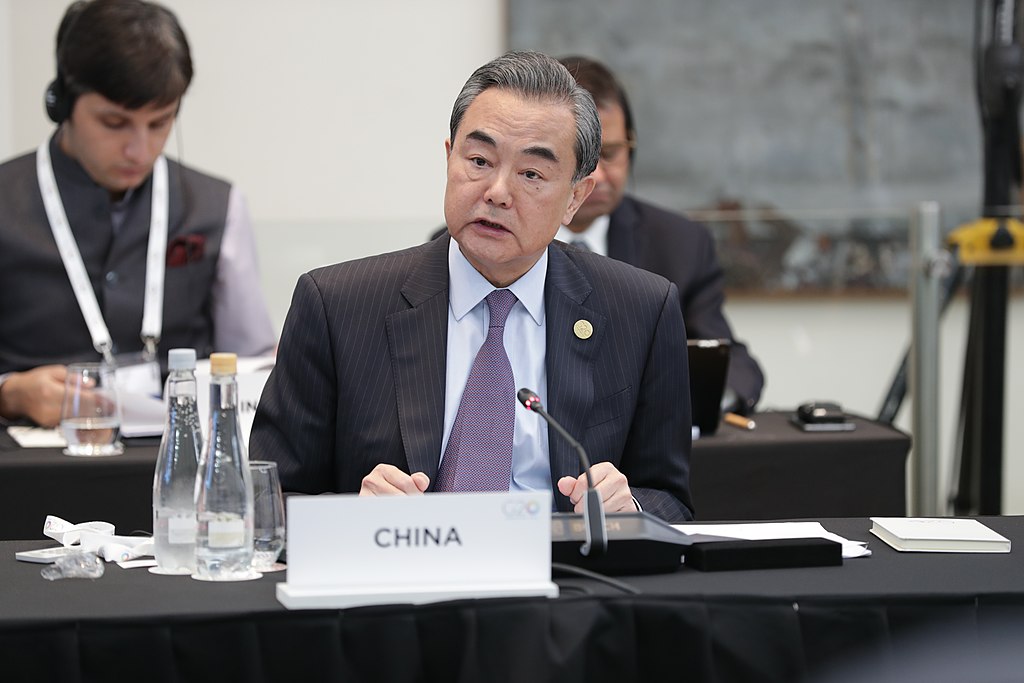
China reaffirmed its commitment to Latin America as a “trustworthy” partner, emphasizing that the region is not any country's "backyard," according to Chinese Foreign Minister Wang Yi. During a meeting with Bolivian Foreign Minister Celinda Sosa at the United Nations, Wang highlighted China's goal to enhance its strategic partnership with Bolivia.
Bolivia, which established diplomatic ties with China in 1985, has become economically reliant on Beijing. The resource-rich nation owes over $1.7 billion to China, the world’s largest bilateral lender, while Chinese firms have invested an additional $6 billion, mainly in Bolivia’s metals, energy, and transportation sectors. In contrast, U.S. foreign direct investment in Bolivia stands at approximately $430 million, primarily in oil, gas, and manufacturing.
As competition between China and the U.S. intensifies in Latin America, Chinese investments in infrastructure and energy are challenging Washington’s historical influence. The geopolitical rivalry escalated during U.S. President Donald Trump’s second term, with the U.S. pressuring nations to curb Chinese influence. Trump strongly opposed China's growing footprint in Panama, warning of potential U.S. action over the Panama Canal. Panama’s President Jose Raul Mulino later confirmed the country’s withdrawal from China’s Belt and Road Initiative, drawing Beijing’s ire.
Wang reiterated China’s support for Latin American countries in defending sovereignty and independence. He also praised Bolivia for joining BRICS, a growing alliance of emerging economies—including Brazil, Russia, India, China, and recent additions such as Saudi Arabia and the UAE—seen as a challenge to Western financial dominance. Trump has warned BRICS members against undermining the U.S. dollar, threatening steep tariffs on those attempting to shift global economic influence.