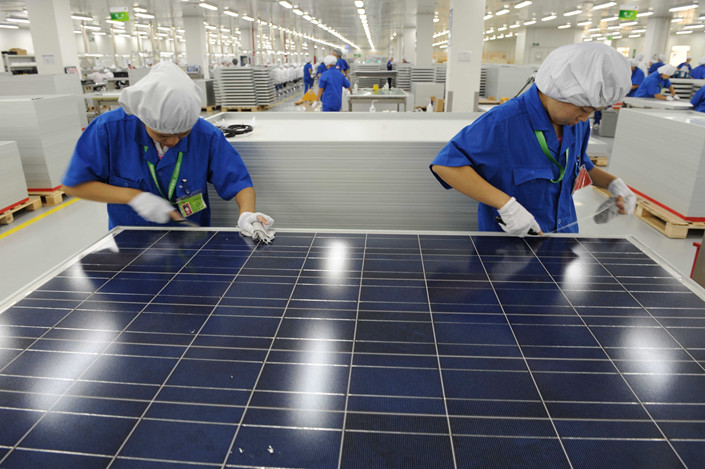
The proportion of locally-made parts dropped as Chinese-made parts increased in the South Korean solar power market in the last five years.
The proportion of South Korean-made solar modules was at 68 percent as of June this year, down by 5 percentage points from 2017.
In contrast, the proportion of Chinese-made solar modules rose from 27 percent to 32 percent.
According to data supplied by Rep. Lee In-sun of the ruling People Power Party, the actual proportion of Korean products is much lower when taking into account the present method of measurement, which counts modules built with Chinese cells as Korean products.
Solar cell output in South Korea is falling behind; it fell from 40% in 2017 to 35 percent in June of this year.
In contrast, the share of Chinese-made solar cells in the Korean solar cell market increased from 52 percent to 59 percent.
According to the Korea Energy Economics Institute, South Korean manufacturers of polysilicon, ingots, and wafers have completely disappeared, while the U.S. and the EU have made investments to strengthen their domestic supply networks and solar panel value chains.
South Korea’s domestic value chain for solar panels has de facto been cut off, Lee said.

Indonesia Fiscal Deficit Outlook: Fitch Signals Flexibility Amid Middle East War Risks
Drug pollution in water is making salmon take more risks – new research
Mercedes-Benz Faces Rising Competition in China but Rejects Price War Strategy
European Car Sales Surge in March as EV and Hybrid Demand Accelerates
Parasites are ecological dark matter – and they need protecting
$16B Michigan Data Center Project Boosts U.S. AI Infrastructure Expansion
Gold Prices Slip as Strong Dollar and Middle East Tensions Weigh on Market
Nikkei Retreats After Brief 60,000 Break as Profit-Taking and Geopolitical Risks Weigh
As the Black Summer megafires neared, people rallied to save wildlife and domestic animals. But it came at a real cost
Fungi are among the planet’s most important organisms — yet they continue to be overlooked in conservation strategies
Asian Markets Mixed as Oil Prices Rise Amid Middle East Tensions and Ceasefire Uncertainty
Oil Prices Rise as U.S.-Iran Tensions and Strait of Hormuz Disruptions Persist
GesiaPlatform Launches Carbon-Neutral Lifestyle App ‘Net Zero Heroes’
Amazon Stock Rises as Meta Expands AWS Partnership for AI Infrastructure
Florida Investigates OpenAI and ChatGPT Over Alleged Role in FSU Shooting
Dollar Weakens Amid Middle East Tensions and Anticipated Central Bank Decisions
Microsoft Commits $18 Billion to Expand AI and Cloud Infrastructure in Australia 


