


 Djibouti Migrant Boat Capsizes, Killing 139 and Leaving 84 Missing
  US, EU Push for Action Against Asia’s Excess Factory Capacity
  Trump Calls for Zelenskyy Replacement Amid Russian Diesel Deal
  Trump Announces Russia-Ukraine Energy Ceasefire Amid U.S. Pressure on Kyiv
  Panama Declares Emergency After 7.7 Earthquake Triggers 200 Aftershocks
  JD Vance Questions Pentagon Plan to Livestream Fort Hood Shooter’s Execution
  North Korea Fires Ballistic Missiles as Tensions With South Korea Escalate
  Trump Buys Up to $25M in Meta Stock, Invests in SpaceX Debt
  Trump Cancels Alabama Football Trip as Hurricane Isaias Approaches
  Houthis Warn Saudi Airports After Deadly Riyadh Attack
  Trump Announces Russia-Ukraine Energy Ceasefire as Zelenskiy Awaits Details
  US Judge Blocks Trump Administration’s Taxpayer-Funded Political Ads
  Trump Sanctions International Criminal Court, Sparking EU Backlash
  Pakistan Declares Emergency in Khyber Pakhtunkhwa, Suspends Imran Khan’s PTI Government
  Zelenskiy Slams US Over Deadly Russian Strikes on Ukraine
  Venezuela’s Machado Calls for Elections by July 2027
  RFK Jr. Launches Nationwide Vaccine Safety Review


 Add as a preferred source on Google
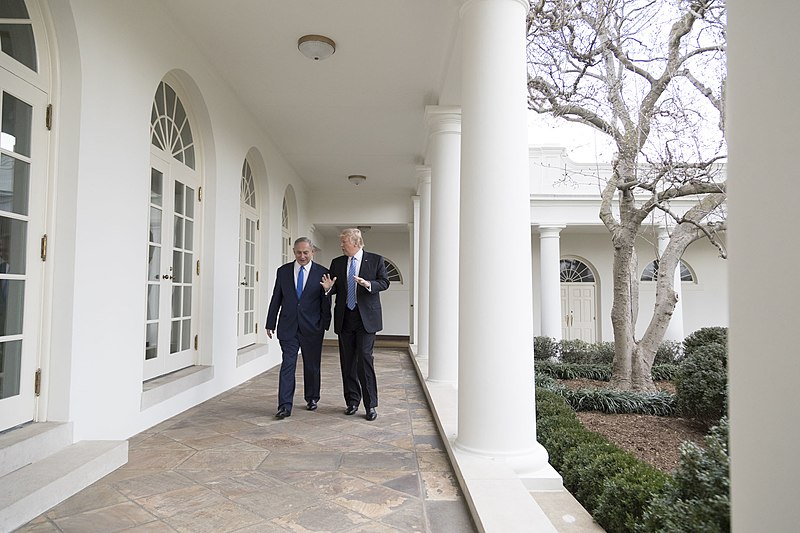
To this day, former President Donald Trump has refused to admit he lost the election and has often cited voter fraud as a reason for his election loss. Following revelations from a recent book where he attacked now-former Israeli Prime Minister Benjamin Netanyahu, Netanyahu’s predecessor Ehud Olmert criticized the former president.
Israeli National News reported that Olmert weighed in on the revelations in Axios correspondent Barak Ravid made in his book. In the book, the former president supposedly attacked Israeli Prime Minister Benjamin Netanyahu for congratulating Joe Biden on his election victory. Olmert described the attack made by the former president as “crazy” and called Trump “pathetic” for doing so.
“Everyone knows my opinion of Netanyahu. I am not fond of him, I don’t appreciate him, I don’t trust him, I don’t believe his integrity,” said Olmert, who also served as mayor of Jerusalem and spent 19 months in prison.
“The fact that Netanyahu congratulated Biden on his election victory shows that he acted as we should expect the Israeli PM to act – to congratulate the duly elected American president. He even hesitated in releasing his congratulatory video and waited until it became an embarrassment that the State of Israel, a stalwart ally of the US, would not congratulate the President-elect of the US on his election victory.”
“Trump said that the fact that Netanyahu congratulated Biden is a betrayal of the special relationship between Israel and the US; that is crazy and beyond understanding. He is a pathetic man,” Olmert added.
Olmert made the criticism while speaking at the 13th Annual Leadership Dialogue on Israel-UK-Australia Relations. The former Israeli PM also criticized Trump for withdrawing the US from the Iran nuclear deal in 2018.
Another revelation that was made by Ravid was regarding the Abraham Accords, the deal that Trump touted as one of his administration’s biggest achievements. The now-former president’s Twitter account was used to threaten Netanyahu into adhering to the agreement, as Netanyahu initially considered backing out. Netanyahu set a deadline of July 1 to begin the process of annexing parts of the West Bank, which would violate international law that would not only destroy the two-state solution but would also potentially destabilize the region.
This move earned widespread backlash, but US ambassador to Israel David Friedman supported the plan and even pushed for it. Trump sent Friedman and White House representative Avi Berkowitz to meet with Netanyahu on the annexation plans. Berkowitz told Netanyahu that the meeting with Trump regarding annexation did not go well.
When Netanyahu threatened to move forward with the plan regardless of what Trump said, Berkowitz warned that he would be “making an enemy out of the US president – and his Twitter account” and lose the international support he needed for annexation.







