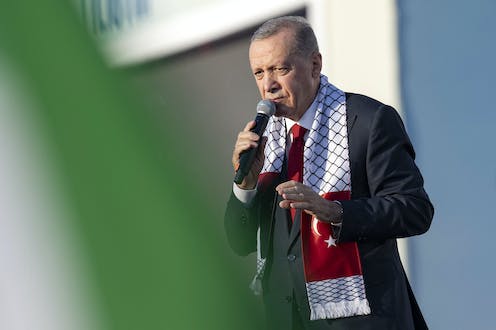
Turkish President Tayyip Erdogan on Saturday accused Israel of deliberately escalating tensions with Iran to derail upcoming nuclear negotiations between Tehran and the United States. Speaking at a meeting of the Organisation of Islamic Cooperation (OIC) foreign ministers in Istanbul, Erdogan said Israel’s recent military actions showed a clear disregard for diplomacy and a preference for conflict.
Erdogan warned that Israel’s timing—launching attacks just before renewed nuclear talks—was a calculated move to undermine diplomatic efforts. He urged influential countries to resist Israel’s “poison” and instead support peaceful dialogue to prevent the spread of regional conflict.
Calling for a unified Muslim response, Erdogan encouraged OIC member states to intensify efforts to hold Israel accountable under international law. He emphasized the need to enforce United Nations resolutions and pursue punitive measures to address what he described as Israel’s aggressive actions.
Tensions have sharply risen in the region, with international attention focused on whether the renewed nuclear talks can proceed amid growing hostilities. Erdogan’s remarks underline Turkey’s push for a diplomatic resolution and its criticism of what it sees as destabilizing behavior by Israel.
The speech reflects Ankara’s ongoing efforts to position itself as a mediator in Middle East affairs, while appealing to Muslim solidarity and international legal frameworks to counter Israel’s military actions. As diplomatic stakes rise, Erdogan's comments are likely to add pressure on global powers involved in the Iran nuclear negotiations.