Yonsei University economics professor Kim Jung-sik warned that prolonged social distancing measures will push small business operators and private companies to the brink of bankruptcy, prompting an increase in bad loans, causing insolvencies at local lenders.
The South Korean government has decided to extend the current Level 2 social distancing until Sept. 6 in Seoul and the surrounding area, while adding stricter rules for eight days beginning Sunday, a move widely viewed as “Level 2.5” on the three-tier system.
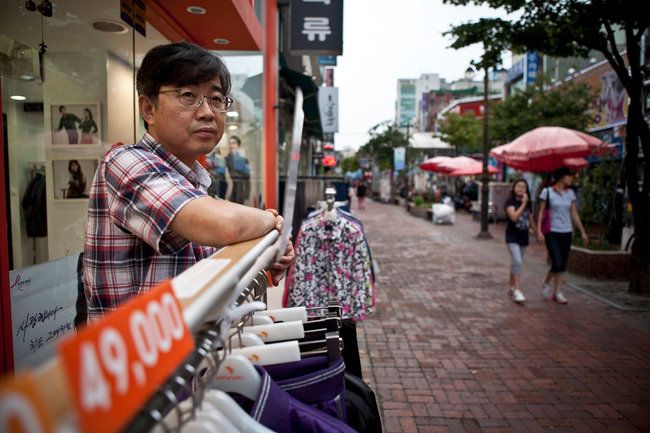
The move would be particularly devastating to sales of small business operators and consumer spending.
Sales of small enterprises declined by 24.7 percent on-year in mid-August, the biggest drop since February.
Their suppliers of goods and services are also vulnerable to the economic disruptions driven by social distancing.
Production in the services sector is expected to extend the downtrend in March and April of 5 and 6.1 percent drops from a year earlier.
More sluggish consumer spending and industrial output would place workers at higher risk of job losses, especially in the service sector that requires face-to-face transactions.
South Korea lost nearly 277,000 jobs in July compared to the previous year, mostly in the accommodation and food service segment, as well as the wholesale and retail industry.
If social distancing reaches Level 3, the local economy will show a state of panic, experts say.
According to the latest research report of KB Securities, imposing a Level 3 social distancing in metropolitan areas and nationwide for about two weeks, will cause the economy to contract by 0.4 percent and 0.8 percent on-year.
Level 3 social distancing bans gatherings of 10 or more people and requires businesses, public facilities, including schools and kindergartens to be closed. Workers of private companies would need to work from home.