


 US Stock Futures Rise as Oil Prices Fall Ahead of Q3 Earnings
  RBA Set for September Rate Hike as Inflation Stays High
  Nasdaq Falls as Oil Prices Surge Ahead of Bank Earnings
  IMF Maintains 2027 Global Growth Forecast at 3.4% Amid Rising Risks
  Trump Secures Russian Diesel Deal as US Fuel Prices Surge
  Samsung, SK Hynix Shares Plunge as China Chip Competition Grows
  BlackRock’s Rick Rieder Favors Bonds Over Stocks as Treasury Yields Surge
  Wall Street Ends Mixed as Investors Await CPI and Bank Earnings
  Fed Unveils Stablecoin Rules Under GENIUS Act
  Gold Prices Hit One-Week High as Oil Falls, Fed Rate Outlook Weighed
  Asian Stocks Plunge as AI Chip Selloff Hits South Korea and Japan
  RBI Raises Repo Rate to 5.50% in Hawkish Shift on Inflation Risks


 Add as a preferred source on Google
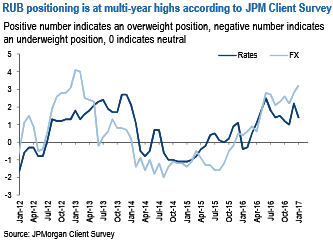
Every good structural story needs a repricing and a clear-out of extended positioning. The medium-term case for Russian local markets is underpinned by high nominal and real interest rates, falling inflation, and a trend of improving macro policy credibility. Yet investors are already positioned to be very long and valuations are only beginning to correct from a starting point of overvaluation (refer above graphs).
In this context, the decision of the CBR to intervene in the FX markets to the tune of $2bn per month is a catalyst for positioning to wash out and a repricing of Russian local rates and currency assets in the short term.
The FX intervention program will be a meaningful drag on the BoP. To put this into perspective, the currently estimated $23bn FX intervention in 2017 compares to our $33bn current account surplus forecast for the year.
The 2015 FX reserve accumulation program resulted in at least 5% RUB depreciation. This is based on the RUB depreciation over the period adjusted for movements in oil and CDS prices.
RUB is overvalued. In our short term FX model, RUB entered the FX intervention announcement trading 2% rich to oil. This has now been corrected to a flat position but we still expect the currency to have to start trading cheap to oil. In our long term REER model, RUB is 5% rich.
RUB positioning is extended. RUB is now the second most extended long globally after BRL.
Oil positioning is extended. Net longs in crude are at their highest levels since mid-2014 increasing risks for a correction. While the new intervention policy should eventually limit RUB’s sensitivity to oil, this will only be the case once RUB reaches its new equilibrium. From current levels, we believe oil price correction is a complementary risk.
To express this view of short-term risks pointing to a repricing and clearing out of long positions, we recommend the following trade: Go long USDRUB with a 63.5 target and 58.5 review level.







