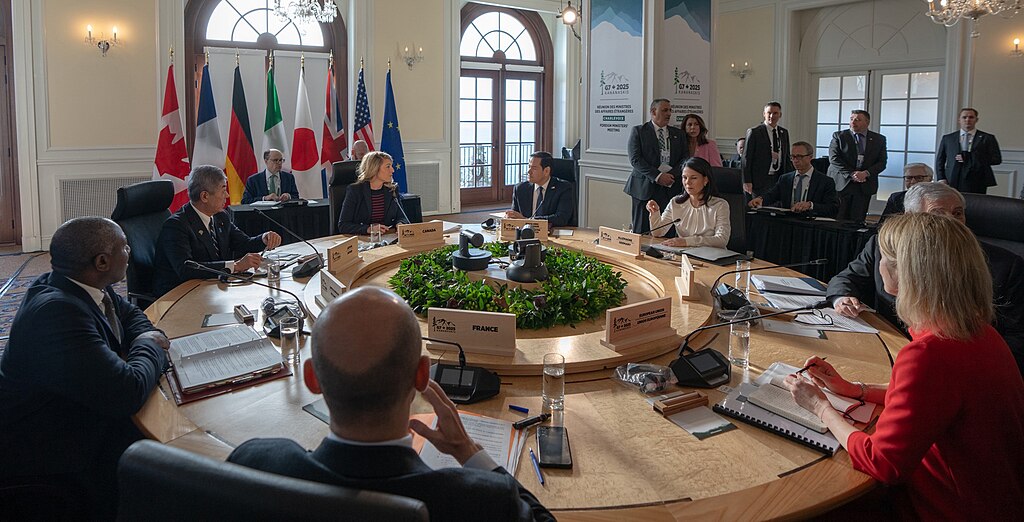
The G7 foreign ministers took a stronger stance on China, notably omitting references to the "one China" policy and calls for stable relations in their latest statement. Meeting in Canada, the ministers condemned Beijing’s “coercion” against Taiwan, mirroring recent U.S.-Japan rhetoric. This shift signals growing Western support for Taipei amid rising tensions with China.
Unlike previous statements, the latest G7 declaration added concerns over China’s nuclear buildup but removed references to human rights issues in Xinjiang, Tibet, and Hong Kong. Also absent were reassurances about maintaining existing Taiwan policies and recognizing China’s significance in global trade. These omissions are likely to provoke strong reactions from Beijing.
China responded by accusing the G7 of "gross interference" and "smearing" its position, emphasizing that peace in the Taiwan Strait depends on adherence to the one-China principle. The statement comes as U.S. President Donald Trump, now back in office, fills key positions with China hawks while weighing a potential summit with Xi Jinping.
Beyond Taiwan, the G7 also criticized China’s aggressive actions in the South China Sea, particularly against the Philippines and Vietnam, citing “dangerous maneuvers” and restrictions on navigation. They also condemned China's non-market policies, which they claim lead to market distortions and supply chain risks.
China dismissed these accusations, calling the Asia-Pacific "not a chessboard for geopolitical rivalries" and urging the G7 to abandon a “Cold War mentality.” It also rejected claims of overcapacity, arguing that the West has politicized economic issues.
With tensions escalating, the G7’s hardened stance marks a significant shift, likely influencing future diplomatic and economic engagements with China.