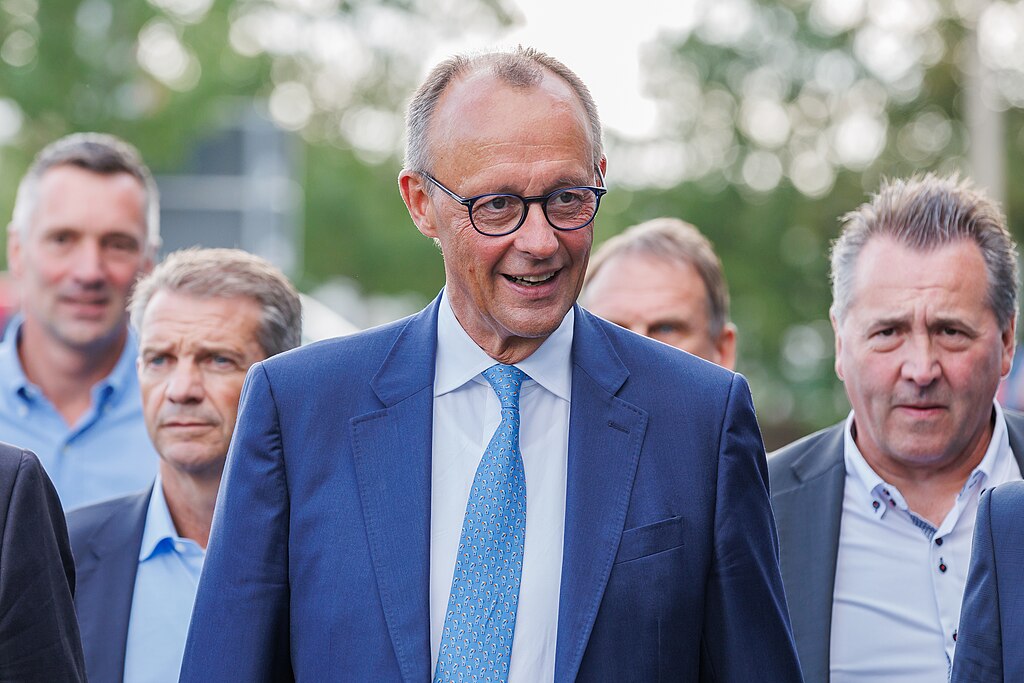
German Chancellor Friedrich Merz said Thursday that Germany is ready to play a leading role in shaping future trade agreements as the U.S. and European Union race to finalize a deal before the July 9 deadline. Speaking after a White House meeting with President Donald Trump, Merz emphasized the importance of deepening transatlantic cooperation on trade and tariffs.
Merz noted that although the EU officially sets trade policy, Germany’s export-heavy economy positions it as a major stakeholder. During his discussion with Trump, he highlighted the scale of German manufacturing in the U.S., particularly the 400,000 vehicles produced by German automakers annually—many of which are exported back to Europe.
The stakes are high: failure to reach a deal could trigger new U.S. tariffs, potentially raising levies on European exports from 10% to as much as 50%. Existing tariffs already include a 50% rate on steel and aluminum and 25% on automobiles, significantly impacting German carmakers.
In interviews with Fox News and CNN, Merz called U.S. tariffs “a real threat” to Germany’s economy and urged for reduced trade barriers, stressing the mutual benefits of open markets. He argued that reciprocal vehicle production figures should justify tariff reductions.
Merz also stated he would coordinate with European Commission President Ursula von der Leyen to push for a resolution. He warned that escalating trade disputes would harm not just German firms but also the roughly one million American families employed by them.
Despite ongoing negotiations in Paris showing promise, Merz concluded, “We’re not yet at the goal line, but I’m optimistic we’ll make progress.”