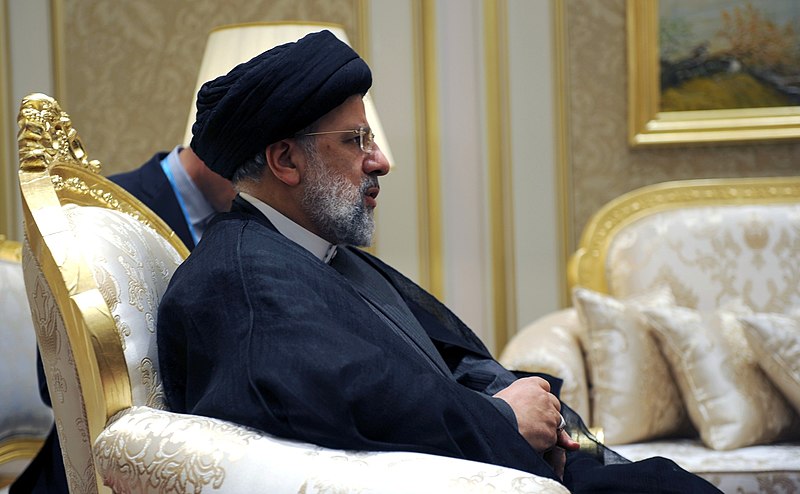
Iranian President Ebrahim Raisi said for the 2015 nuclear deal to be restored, the UN’s nuclear watchdog must close its probe related to the nuclear particles found at Iranian facilities. Raisi’s comments come as Iran has maintained its demand that the UN nuclear watchdog closes its probe.
During a news conference in Tehran Monday, Raisi marked a year since he became Iran’s new president. Raisi said that the investigation by the International Atomic Energy Agency related to uranium particles in Iran’s nuclear facilities must be scrapped if the 2015 nuclear agreement is to be revived.
“Without resolving safeguards issues, talking about an agreement would be meaningless,” said Raisi, who reiterated that he would not meet with US President Joe Biden during his visit to New York for the United Nations General Assembly. Raisi said such a meeting with his US counterpart would not benefit Iran’s interests.
IAEA chief Rafael Grossi has called on Iran to fully cooperate with the probe into the traces of uranium particles found years ago at several Iranian nuclear sites. Grossi said the only way to close the investigation was for Iran to cooperate.
Raisi’s comments echoed that of other Iranian officials, indicating that Tehran has maintained its demand regarding the investigation. However, Iran may be open to negotiating the matter on the final text of the deal.
The Iranian news outlet affiliated with the Supreme National Security Council, Nournews, reported Monday that Iran’s demand to “verify” the lifting of sanctions also extends to the safeguards issue.
Iran and other world powers are on the way to restoring the 2015 nuclear agreement, which the United States under Donald Trump unilaterally withdrew from in 2018. Washington, at the time, imposed harsh sanctions on Iran
Nournews also reported over the weekend that Tehran is reviewing Washington’s response to the final text proposed by the European Union to restore the nuclear agreement. The review of the US response would take at least until the end of the week. The working week in Iran ends on Friday, so a response by Tehran may not come before September 2.
Iran responded to the EU-drafted proposal earlier this month, and the US responded Wednesday last week.