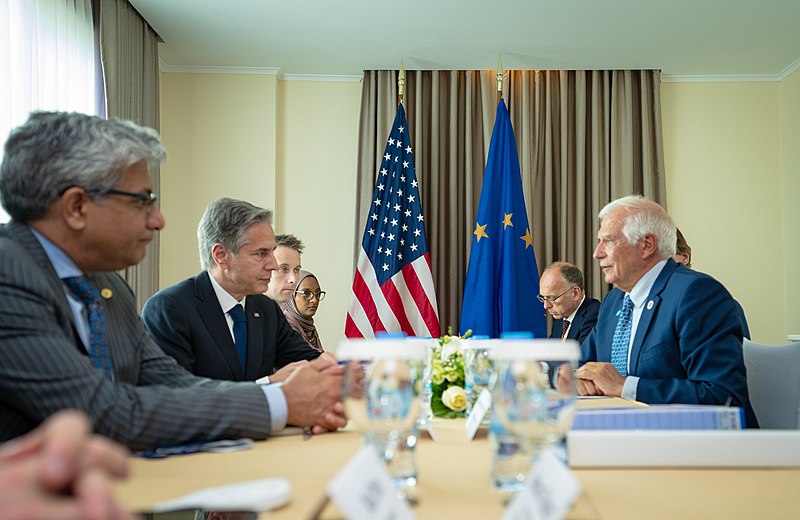
After more than a year of negotiations to restart the 2015 nuclear agreement, the efforts may come to fruition following the response by Iran to the European Union’s proposed deal. The EU’s foreign policy chief said the United States could hopefully respond positively to the new proposal that would revive the nuclear agreement.
The European Union’s foreign policy chief Josep Borrell said Monday that Iran has given a “reasonable” response toward the proposal that follows 16 months of indirect negotiations between Tehran and Washington. Borrell then said he hopes the US would respond formally so negotiations could come to an end.
“It was transmitted to the United States, which has not yet responded formally…I hope the response will put an end to the negotiations. The world would be a much safer place if we can make this agreement work,” said Borrell at a university event in Santander, Spain.
Last week, Iran responded to the proposal with “additional views and considerations” and called on the US to be flexible in resolving the three outstanding issues.
On the same day, Iran’s foreign ministry spokesperson Nasser Kanani accused the US of “procrastinating” in the negotiations.
While the contents of the new proposal have yet to be published, a previous report by Al Jazeera Arabic said it would call for releasing the billions of dollars in frozen Iranian funds and unblocking Tehran’s oil exports. An EU official previously said the proposal that was presented is the “final offer” to revive the 2015 agreement that was unilaterally withdrawn from by the US under Donald Trump in 2018.
The failure to restart the nuclear agreement could result in regional conflict as Israel has threatened to take military action against Iran if diplomacy does not succeed in Iran acquiring nuclear weapons. Tehran has repeatedly maintained that its nuclear program is for peaceful purposes.
US State Department spokesperson Ned Price responded to Kanani’s comments Monday, saying that the accusation of Washington procrastinating is not true.
Price explained that Washington is putting together an appropriate response to Iran’s reply to the European Union’s proposal and will respond after consulting with allies and internal discussions.
Price suggested that Iran has dropped its demand for the US to remove its Revolutionary Guards from the US Foreign Terrorist Organization designation. The request was rejected by President Joe Biden.