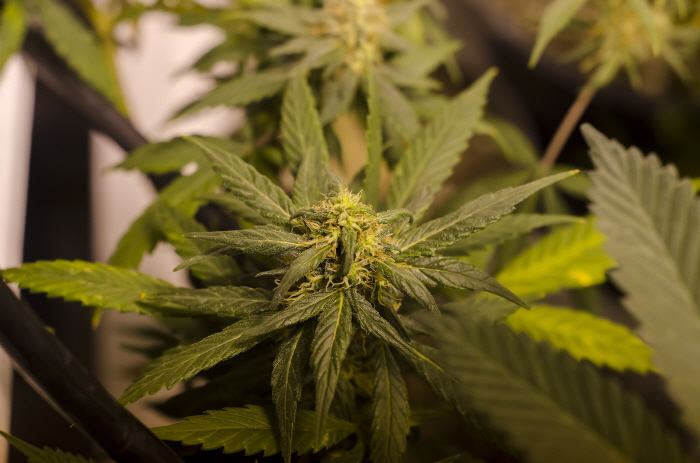
Cannabis continues to be the UK’s favourite illicit drug with over 2m people using it in the last year. However, there are fears that the drug is becoming increasingly potent and that it could pose a public health risk. But how reliable is the evidence? And is it really getting stronger?
The debate about cannabis potency and harm is long running. It predates the downgrading of cannabis classification from class B to class C in 2004, but this episode demonstrated some of the issues with estimating the harms of the drug. Research conducted at the time highlighted how the relative harms of cannabis compared with other class B substances was one of the factors behind the decision to reclassify. However, critics accused the government of ignoring emerging evidence that cannabis was becoming more potent and that it represented a serious public health problem.
Those more sympathetic to the change in classification questioned whether this interpretation of cannabis potency was accurate, highlighting how an alternative conclusion had been drawn from published research which suggested only modest changes in cannabis potency over the 20 to 30 years prior to 2004.
Others, meanwhile, questioned the relevance of potency evidence, pointing to a shortage of studies looking at the consumption of cannabis in a natural setting and how users may well be smoking higher strength strains, but that they could be “titrating” their doses as a consequence, for example, by taking smaller puffs.
The debate over potency is not helped by politicians referring to the “lethal quality” of today’s cannabis and although the evidence is inconclusive, there is widespread acceptance that strains of cannabis are stronger than in previous decades.
To date, most assessments of cannabis potency have focused on increasing levels of tetrahydrocannabinol (THC). But this doesn’t provide the full story. Cannabis contains hundreds of compounds, some of which interact with each other. For example, THC helps the user get high, but another compound, cannabidiol (CBD), can counter this by reducing unpleasant feelings such as anxiety. So it is the balance between THC and CBD over time that is important.
It would seem that many cannabis producers have competed to incrementally increase THC levels while selectively breeding out the more protective cannabinoids. Seizures from the US Drug Enforcement Administration show how this ratio has changed in America over the last 20 years.

CBD / THC ratio over time. ElSohly et al 2016
This changing ratio was helped in the UK by the introduction of hydroponic techniques in the 1980s for cultivating cannabis.
Proxy problems
Proxy measures of cannabis potency such as those based on home seizures of cannabis are widely used and quoted. But we don’t know if the cannabis seized is a representative sample of the cannabis in circulation. Steve Rolles, senior policy analyst for Transform Drug Policy Foundation, describes it as “a massive data hole”.
Also, the quality and sophistication of the cannabis testing procedures, such as chromatography, used to analyse seizures has improved over recent decades. But this means seminal and widely quoted research is outdated and less relevant.
Another factor to consider is how much cannabis is consumed in the average joint. A recent analysis of over 10,000 cannabis transactions carried out in the US between 2000 and 2010, estimated that the average joint contains 0.3g. This is significantly lower than the previous estimates of 0.75 to 1g.
Other factors that influence the strength of the hit are how deeply you inhale and how long you hold the smoke in your lungs.
The method used to ingest the drug also influences a user’s experience, such as eating, vaping or smoking. Dose can be increased by using a bong whereby a greater quantity of the drug is inhaled in one go compared to a single hit on a joint. Higher potency concentrates known as “dabs” have the potential to alter the level of intoxication .
Research gathered from a subset of cannabis users creates ill informed policy, threatening the credibility of public health messages.
Why any of this matters
Without any quality assurance system such as the one recently introduced at a festival, it is likely that younger users – who haven’t been using cannabis for long – are the most vulnerable to variations in cannabis potency.
There are public health implications. Cannabis users have to rely on their own knowledge when deciding on the dosage to achieve the desired high. A regulated market such as the one in Colorado could mean users are able to make better decisions and, in turn, reduce the rate of people needing treatment services where cannabis is the primary problem .
The government should regulate cannabis products to make them safer, enabling consumers to make more informed choices. It should create opportunities for targeted education and harm reduction, and employ other evidence-based health interventions.
The science underpinning the cannabis potency story is problematic. With so many people using cannabis, it can’t be acceptable to continue with a system where basic information about this product’s strength and purity are obscure. It is time for a national survey of cannabis that not only provides information about the strength of cannabis but how exactly it is consumed, too.
 Ian Hamilton is affiliated with Alcohol Research UK.
Mark Monaghan does not work for, consult, own shares in or receive funding from any company or organisation that would benefit from this article, and has disclosed no relevant affiliations beyond the academic appointment above.
Ian Hamilton, Lecturer in Mental Health, University of York
Mark Monaghan, Lecturer in Crimimology and Social Policy, Loughborough Universit
This article was originally published on The Conversation. Read the original article.