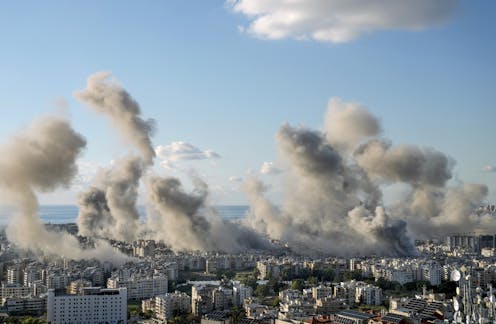
Early Friday morning, Israeli forces launched an airstrike involving three missiles aimed at a building located in the southern suburbs of Beirut, according to security sources familiar with the situation. Details surrounding the strike remain limited, with authorities yet to release information on casualties or the extent of structural damage.
The attack is part of a broader Israeli military offensive against Hezbollah, the Lebanon-based militant group, which was formally launched on March 2. The offensive came in direct response to Hezbollah initiating rocket fire into Israeli territory. The militant group has maintained that its actions were carried out as retaliation following the assassination of Iran's Supreme Leader, an event that dramatically escalated tensions across the region.
The southern suburbs of Beirut, commonly referred to as Dahiyeh, have historically served as a stronghold for Hezbollah and have frequently been the target of Israeli military operations during periods of heightened conflict. Friday's strike signals a continued and aggressive Israeli military posture as the situation between the two sides shows no signs of de-escalation.
The ongoing conflict has drawn international concern, with world leaders and humanitarian organizations calling for an immediate ceasefire and urging all parties to protect civilian lives and infrastructure. The exchange of hostilities between Israel and Hezbollah risks further destabilizing an already fragile Lebanon, a country still grappling with deep economic hardship and political instability.
As the situation continues to develop, regional analysts warn that without diplomatic intervention, the conflict could expand beyond Lebanese borders and draw in additional state and non-state actors, intensifying what is already a volatile and dangerous standoff in the Middle East. Further updates are expected as more information becomes available from the ground.