
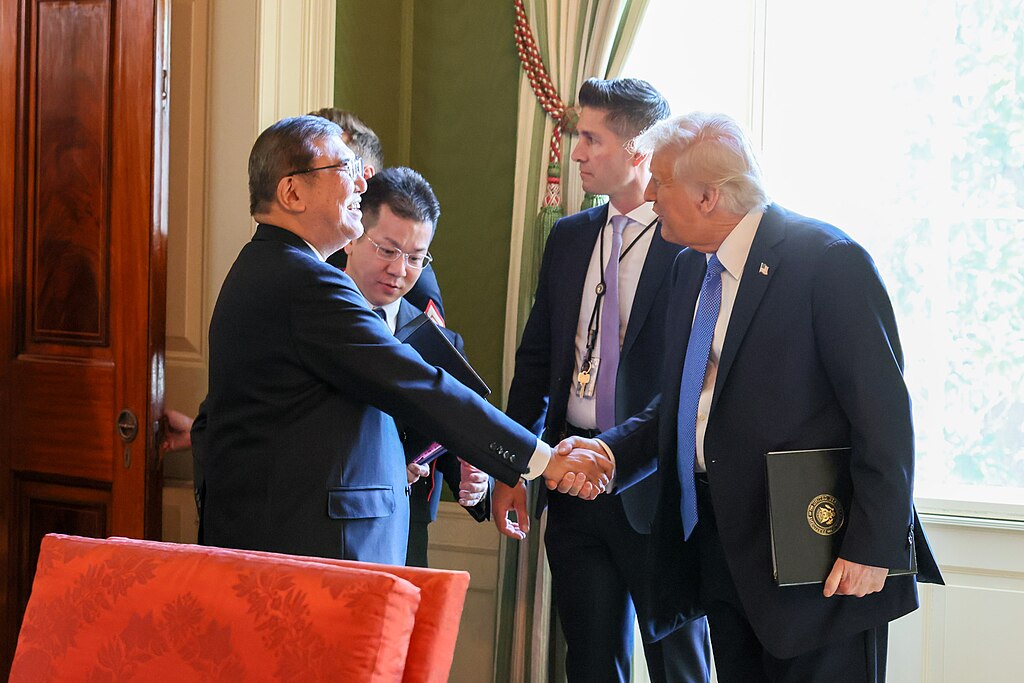
Japanese Prime Minister Shigeru Ishiba and U.S. President Donald Trump failed to reach an agreement on tariffs during their recent meeting, according to a report by Fuji TV on Tuesday. The stalled negotiations underscore persistent tensions between the two major economies over trade policies and economic cooperation.
While details of the discussion remain limited, the failure to secure a deal could impact bilateral economic relations and create uncertainty for industries dependent on cross-border trade. Analysts say the deadlock may delay progress on broader trade agreements between Japan and the United States, especially in sectors like automobiles, agriculture, and technology.
This latest development comes amid heightened global scrutiny of protectionist policies, with the United States continuing to renegotiate or challenge trade terms with major partners. Japan, which has sought to maintain open trade relations, may now face increased pressure to protect its domestic industries while balancing economic ties with the U.S.
Neither government has released an official statement detailing the breakdown, but sources suggest that disagreements centered on proposed tariff reductions and import quotas. The outcome signals a setback for those hoping for a swift resolution to trade disputes ahead of upcoming economic summits.
Market watchers are closely monitoring the situation, as the lack of a concrete agreement could influence investor sentiment and impact both Japanese and U.S. markets. With no confirmed timeline for renewed talks, attention now turns to future diplomatic engagements that could revive negotiations.
As global trade dynamics shift, the outcome of Japan-U.S. tariff discussions will play a crucial role in shaping economic alliances in the Asia-Pacific region and beyond. Stakeholders from both nations are urging leaders to find common ground that supports long-term economic stability and mutual growth.


