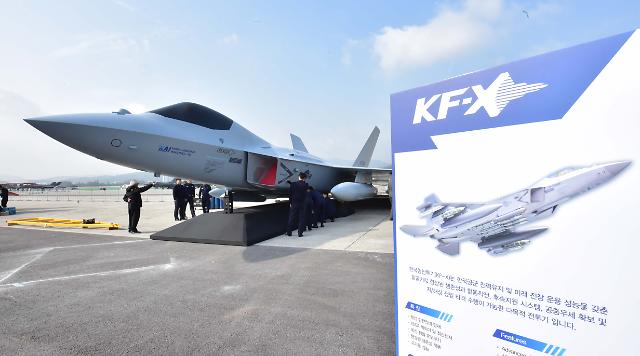
South Korea is confident that it could build its first indigenous fighter jets under the 8 trillion won KF-X program without its supposed partner Indonesia, which is defaulting on its deal.
Indonesia is seeking a 20 percent share in the KF-X program and technology know-how but has so far paid just $22 million, about 13 percent of what it is owed.
South Korea holds 80 percent in the program, which is set to reveal its prototype jet Friday.
The Indonesian defense minister is expected to address the dispute with his South Korean counterpart during the unveiling ceremony in South Korea.
Indonesia has reportedly asked Korea to halve its burden or approve a loan and help build local production lines, though the Korean government denies it has received such a request.
COVID-19's battering of Indonesia's economy is reportedly among the reasons why it is defaulting on the deal.
According to a senior South Korean official, there is yet no material change to the contract between the two countries and they are looking on how to resolve the situation.
The director-general in charge of the program said that even if the partnership with Indonesia ceases, the program will go on.
South Korea’s confidence lies emanates from its ability to build prototype jets. South Korea was expected to make 120 jets, while Indonesia, which will be given a prototype and technology know-how, is responsible for 48.
South Korea would not have to return what Indonesia has paid up, as their contract prevents such action.
Nevertheless, the government is seeking to work the situation out with Indonesia.
A Seoul official said that breaking the partnership is not a smart move as it is essentially turning its back on Indonesia, which is the largest buyer of South Korea’s weapons, accounting for 17 percent of Korea’s arms exports from 2014 to 2018..
Such a move would also affect Korea’s long-term initiative to carve out its presence in the aerospace market.