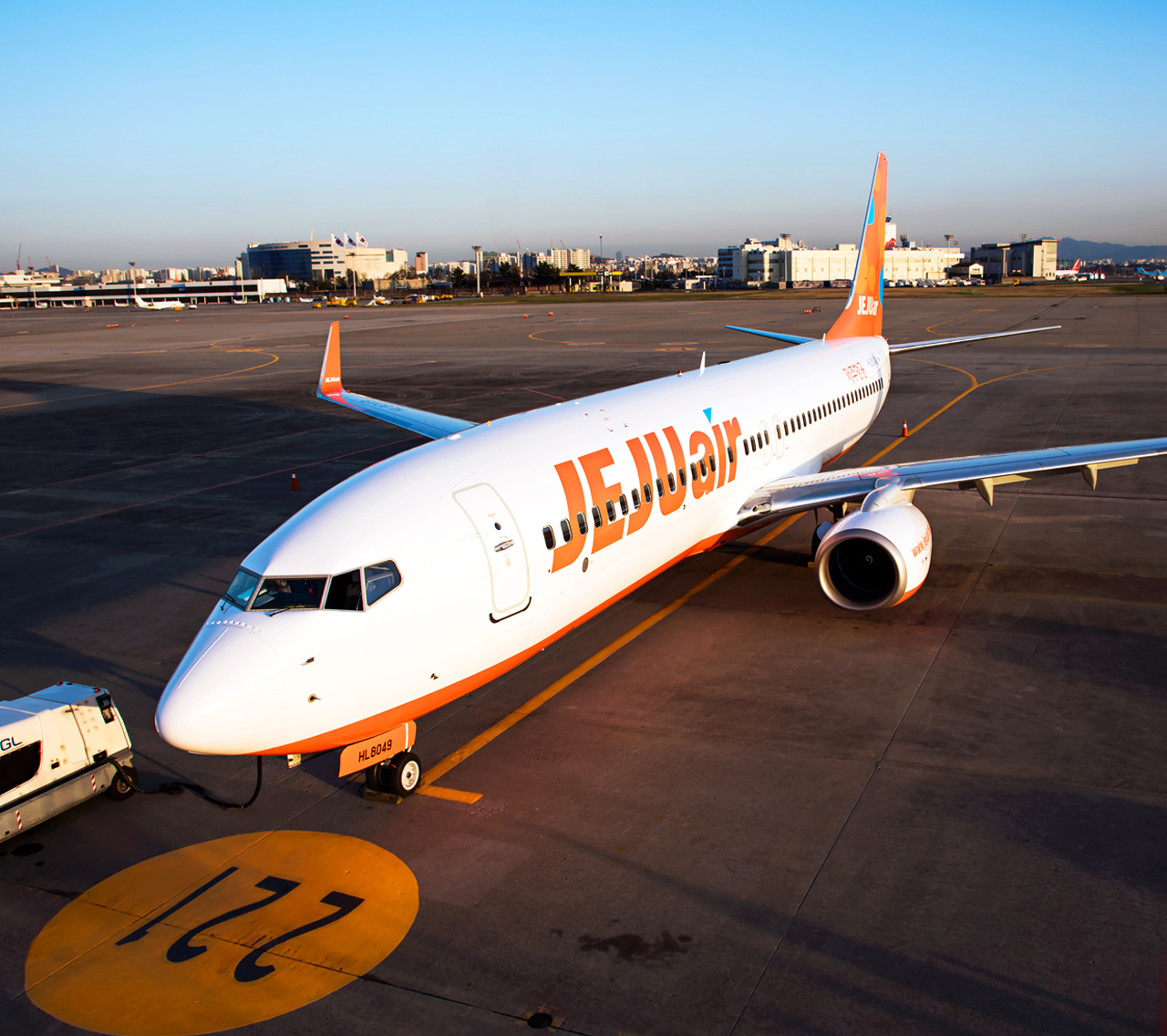
The government of South Korea may increase its 300 billion won liquidity support for low-cost carriers (LCCs) due to the latter's massive decline in international flights.
The coronavirus outbreak pulled down the number of LCCs' international flights by 98.1 percent, thereby contributing to losses of over 6 trillion won in the first quarter.
The government had announced in February that the Export-Import Bank of Korea and Korea Development Bank would provide liquidity support of 300 billion won to LCCs.
However, it is expected to take some time before the additional liquidity supply would be carried out as the initial support budget is yet to be completed.
The current liquidity support allocates 40 billion won for Jeju Air, 30 billion won each for Air Busan and Jin Air, 20 billion won for Air Seoul, and six billion won for T'way Air.
But with the South Korean LCC industry being in oversupply compared with those of Japan, China, and the United States, some industry observers pointed out that the additional liquidity supply may not be appropriate.



OpenAI Expands Enterprise AI Strategy With Major Hiring Push Ahead of New Business Offering
TSMC Eyes 3nm Chip Production in Japan with $17 Billion Kumamoto Investment
SpaceX Pushes for Early Stock Index Inclusion Ahead of Potential Record-Breaking IPO
Anthropic Eyes $350 Billion Valuation as AI Funding and Share Sale Accelerate
Uber Ordered to Pay $8.5 Million in Bellwether Sexual Assault Lawsuit
Tencent Shares Slide After WeChat Restricts YuanBao AI Promotional Links
Ford and Geely Explore Strategic Manufacturing Partnership in Europe
Global PC Makers Eye Chinese Memory Chip Suppliers Amid Ongoing Supply Crunch
TrumpRx Website Launches to Offer Discounted Prescription Drugs for Cash-Paying Americans
Nvidia Nears $20 Billion OpenAI Investment as AI Funding Race Intensifies
Prudential Financial Reports Higher Q4 Profit on Strong Underwriting and Investment Gains
Baidu Approves $5 Billion Share Buyback and Plans First-Ever Dividend in 2026
SpaceX Prioritizes Moon Mission Before Mars as Starship Development Accelerates
Alphabet’s Massive AI Spending Surge Signals Confidence in Google’s Growth Engine
Australian Scandium Project Backed by Richard Friedland Poised to Support U.S. Critical Minerals Stockpile
Nvidia, ByteDance, and the U.S.-China AI Chip Standoff Over H200 Exports
Toyota’s Surprise CEO Change Signals Strategic Shift Amid Global Auto Turmoil 


