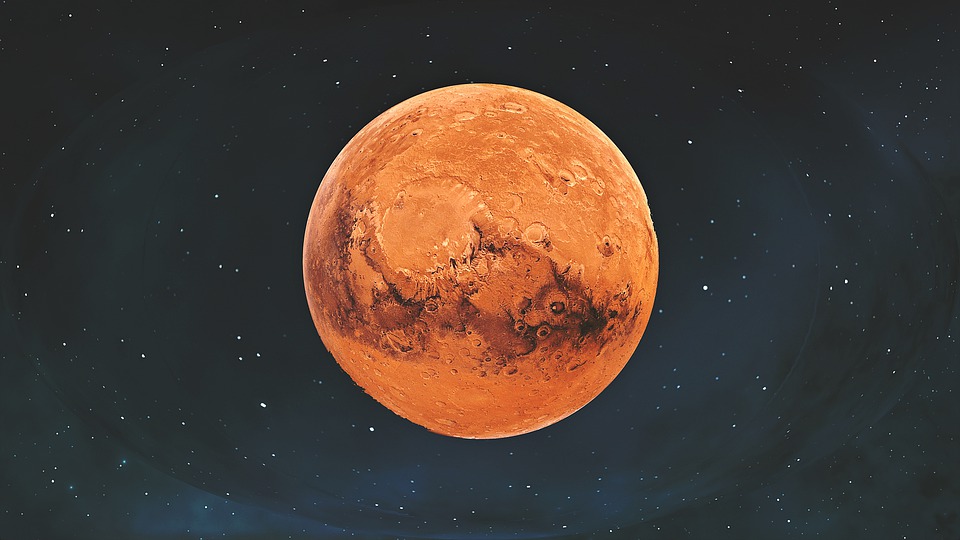
With the upcoming space missions focusing on our own neighboring planet Mars, many are now looking into what the red planet once was. Recent data from NASA’s Curiosity Rover is falling in line with the long-running belief of Mars once being a habitable planet.
NASA has recently announced that Mars may have been a habitable planet at one point long ago, due to the proof that floods once occurred on the Martian surface. Specifically, the Curiosity Rover found proof of floods having filled up the Gale crater on the Martian equator. This finding sheds more light on whether life was present on the red planet. As to what caused the floods, researchers believe that it may have been triggered by the heat generated from an asteroid collision.
“We identified megafloods for the first time using detailed sedimentological data observed by rover Curiosity,” said astrobiologist Dr. Alberto Fairen. “Deposits left behind by megafloods had not been previously identified with orbiter data.”
The evidence for the floods, according to Dr. Fairen, could be found in the ripples left behind on geological structures on the Martian surface that look similar to our own on Earth. On Mars, wave-shaped features were found on the Gale crater surface 350 feet apart. These would suggest floods that may have occurred four billion years ago, the antidunes that formed looking similar to the melting ice found on Earth two million years ago.
Thus, the cause of the flooding was likely from the melting ice from the heat caused by a large impact event. The event would also result in the release of carbon dioxide and methane. The gases paired with the water vapor produced a temporary period of warm and wet conditions on Mars. Heavy condensation created clouds of water vapor and resulted in torrential rain.
Meanwhile, NASA’s Perseverance Rover is still on its way to the red planet and the agency has put the rover to use already as its built-in microphone recorded the sounds of space on its journey. The sounds could be heard on the agency’s SoundCloud which may appear to be an eerie silence, but NASA has said that it is not like that at all.