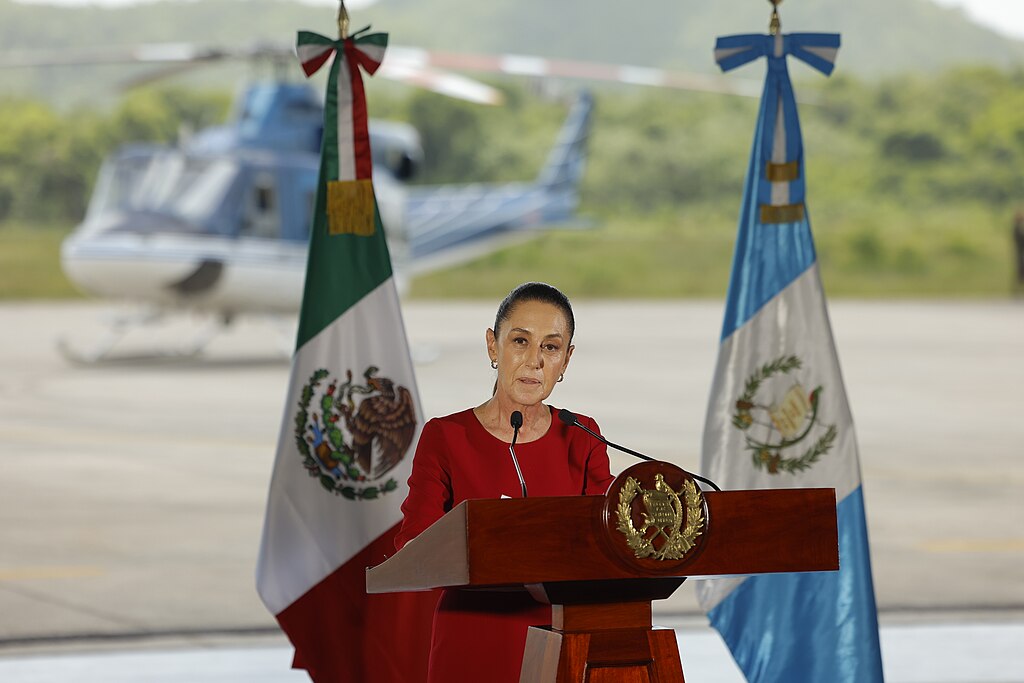
Mexican President Claudia Sheinbaum voiced strong opposition to the U.S. government’s decision to revoke approval for 13 Mexican airline routes to the United States and suspend combined passenger and cargo flights from Mexico City’s Felipe Angeles International Airport (AIFA). Sheinbaum announced plans to request a meeting between Mexico’s foreign minister and the U.S. Secretary of State to review what she described as “unilateral actions,” expressing confidence that both nations can reach an understanding.
The dispute stems from ongoing tensions over aviation regulations between the two countries. U.S. Transportation Secretary Sean Duffy accused Mexico of “illegally canceling and freezing U.S. carrier flights for three years without consequences.” According to the U.S. Department of Transportation, Mexico has been out of compliance with the bilateral aviation agreement since 2022, following its decision to withdraw U.S. passenger carriers’ slots and force all-cargo carriers to relocate operations away from Mexico City.
In response, Sheinbaum said she will meet with Mexican airlines on Friday to discuss the implications of the U.S. move. Low-cost carrier Viva Aerobus, one of the affected airlines, stated that the decision and its abrupt timing will impact thousands of American and Mexican travelers during the busy holiday season. The suspension affects routes from AIFA to major U.S. destinations including Los Angeles, Chicago, Orlando, Austin, Dallas, Denver, Houston, Miami, and New York, which were scheduled to launch in November.
Another airline, Volaris, said the cargo rule changes would have minimal impact due to its limited freight operations but noted it is assessing alternatives after the cancellation of its planned AIFA–New Jersey passenger route. The Mexican Air Pilots Union expressed deep concern over Washington’s actions, warning that the measures could harm air connectivity, aviation competitiveness, and thousands of jobs as Mexico prepares to celebrate Día de los Muertos this weekend.