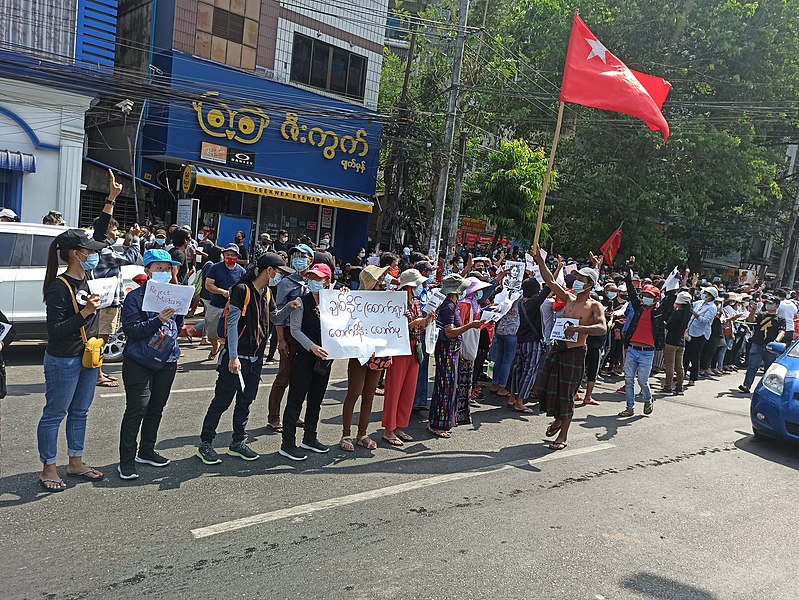
The United Nations Security Council adopted a resolution regarding Myanmar, demanding that its junta government end the violence. This marks the first adopted resolution on Myanmar since 1948.
The UN Security Council adopted its first resolution on Myanmar for the first time in 74 years, demanding that the violence be put to an end and that the junta release all of its political prisoners, including the country’s leader it ousted, Aung San Suu Kyi. Three members: Russia, China, and India, abstained from the vote, with the 12 members of the council voting in favor.
“Today we’ve sent a firm message to the military, that they should be in no doubt – we expect this resolution to be implemented in full,” said the United Kingdom’s UN ambassador Barbara Woodward following the vote. “We’ve also sent a clear message to the people of Myanmar that we seek progress in line with their rights, their wishes, and their interests.”
Chinese UN ambassador Zhang Jun told the council that there is no “quick fix” to the current situation in Myanmar. Zhang said the situation solely depends on the country itself. Zhang said he wanted the Security Council to adopt a formal statement on Myanmar rather than a resolution.
Russian UN ambassador Vassily Nebenzia said Moscow did not consider the situation in Myanmar as a threat to international security and, therefore, should not be addressed by the security council.
Negotiations for the adopted resolution began in September, with the initial draft seen by Reuters urging to end the transfer of arms to the junta and threatening sanctions. The resolution was welcomed by the group Burma Campaign UK but said that there would be “no practical impact” and that imposing an arms embargo should have been enforced instead.
A United Nations Committee blocked the junta from taking the country’s UN seat. Two diplomats familiar with the matter told AP that the UN Credentials Committee deferred the action on the junta’s request. The country’s current ambassador, appointed by the ousted government, will remain as Myanmar’s representative.
Requests from Afghanistan’s Taliban and Libya’s competing governments were also deferred, and their current ambassadors to the UN remain.