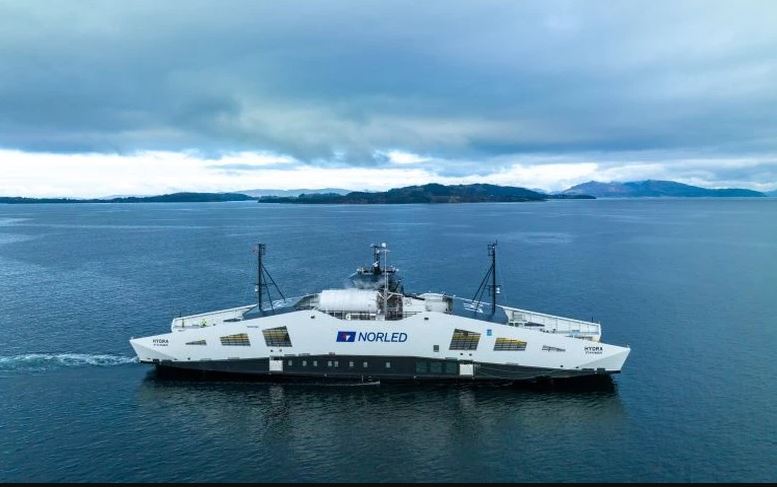
Norway started operating the MF Hydra ferry as the world's first ship running on liquid hydrogen.
According to Erlend Hovland, chief technology officer of Norled, a Norwegian ferry operator, they have conducted a lot of development and testing and are now looking forward to welcoming passengers on board for a zero-emission journey between Hjelmeland and Nesvik.
Norled led the project to develop the technology for MF Hydra, while Linde Engineering of Germany supplied the hydrogen systems on board, and Danish Ballard developed the fuel cells that produce electricity from hydrogen.
The development of new technology was enabled by the Norwegian Public Roads Administration (NPRA).
Norled noted that its pilot project in Hjelmeland is important for global shipping as liquid hydrogen could have a key role in the green maritime transition.



JPMorgan’s Top Large-Cap Pharma Stocks to Watch in 2026
Niigata Set to Approve Restart of Japan’s Largest Nuclear Power Plant in Major Energy Shift
China Keeps Benchmark Lending Rates Steady as Economic Outlook Remains Cautious
GLP-1 Weight Loss Pills Set to Reshape Food and Fast-Food Industry in 2025
Drug pollution in water is making salmon take more risks – new research
BlackRock-Backed Global Ports Deal Faces Uncertainty Amid Cosco Demands
Hyundai Recalls Over 51,000 Vehicles in the U.S. Due to Fire Risk From Trailer Wiring Issue
How is Antarctica melting, exactly? Crucial details are beginning to come into focus
Mexico Antitrust Review of Viva Aerobus–Volaris Deal Signals Growth for Airline Sector
Swimming in the sweet spot: how marine animals save energy on long journeys
Global Markets Rise as Tech Stocks Lead, Yen Strengthens, and Commodities Hit Record Highs
Thousands of satellites are due to burn up in the atmosphere every year – damaging the ozone layer and changing the climate
Yen Stabilizes Near Lows as Japan Signals Readiness to Intervene Amid Dollar Weakness
Burkina Faso and Mali’s fabulous flora: new plant life record released
German Exports to the U.S. Decline Sharply as Tariffs Reshape Trade in 2025 


