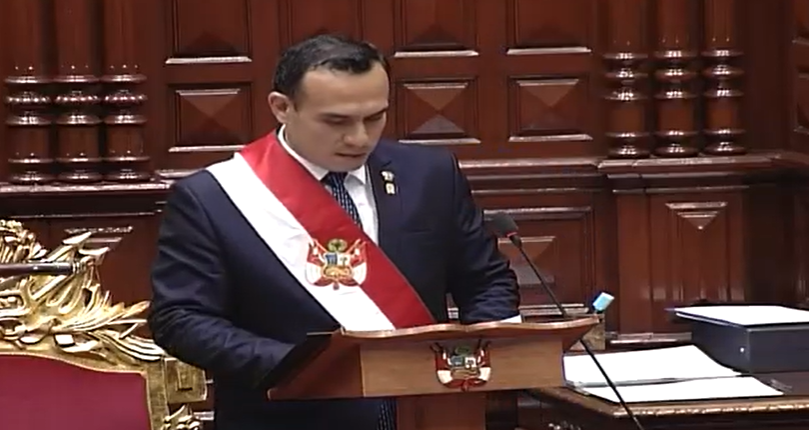
Peru’s Congress has scheduled a key debate for Tuesday on a motion to remove President Jose Jeri, intensifying political uncertainty in the country. Congressional leader Fernando Rospigliosi announced the decision on social media Friday, confirming that lawmakers will discuss the potential ousting as the administration faces mounting scrutiny.
The political turmoil centers on allegations that President Jeri held undisclosed meetings with a Chinese businessman. Reports of these private encounters have sparked controversy and raised questions about transparency, accountability, and possible conflicts of interest within the Peruvian government. While no formal charges have been announced, the scandal has fueled opposition efforts to push forward impeachment proceedings.
Jose Jeri, who previously served as head of Congress, was sworn in as Peru’s president in October. His appointment followed an emergency congressional session that removed his predecessor from office, marking yet another chapter in Peru’s ongoing political instability. Since taking office, Jeri has pledged to restore public trust and strengthen governance, but the latest allegations threaten to undermine those efforts.
The upcoming congressional debate is expected to focus on whether sufficient grounds exist to initiate removal proceedings. Lawmakers will examine the details surrounding the alleged undisclosed meetings and assess their implications for national governance and foreign relations, particularly given Peru’s economic ties with China.
Political analysts say the outcome of Tuesday’s debate could significantly impact Peru’s leadership and policy direction. If Congress advances the motion to remove President Jose Jeri, the country could once again face a leadership transition, adding to years of institutional volatility.
As Peru navigates this developing political crisis, investors, citizens, and international observers are closely monitoring Congress’s actions. The decision will likely shape the immediate future of the presidency and influence the broader stability of Peru’s political landscape.