


 Russia Approves Sberbank for Crypto Exchange Services
  Epic Games Delays Disney Shooter, Shifts to AI-First Development
  Coinbase CEO Backs SEC Accredited Investor Reform
  Binance to Shut Down Crypto Mining Pool Services on November 10
  Most Americans Oppose Election Betting on Prediction Markets, Poll Finds
  Moonshot AI Executives Seek Settlement Ahead of Hong Kong IPO
  Albertsons Seeks $9.3 Billion From Kroger Over Failed Merger
  PepsiCo Slashes Poppi Earnout Valuation as Growth Slows
  Airbus Tests Valkyrie Combat Drone in Europe for Eurofighter Integration
  Apple Supplier Luxshare Faces US Patent Probe, Sees Limited Impact
  Syndax Stock Drops 15% After Axatilimab Trial Failure
  Visa Wins China Approval to Prepare Domestic Payments Expansion
  South Korea Blocks 27 Crypto Exchange Websites in Regulatory Crackdown
  Nvidia’s China AI Chip Market Share Falls to 34% as Huawei Gains Ground
  Bumble Shares Surge 50% on $1 Billion Buyout Talks
  Samsung, SK Hynix Shares Plunge as China Chip Competition Grows


 Add as a preferred source on Google
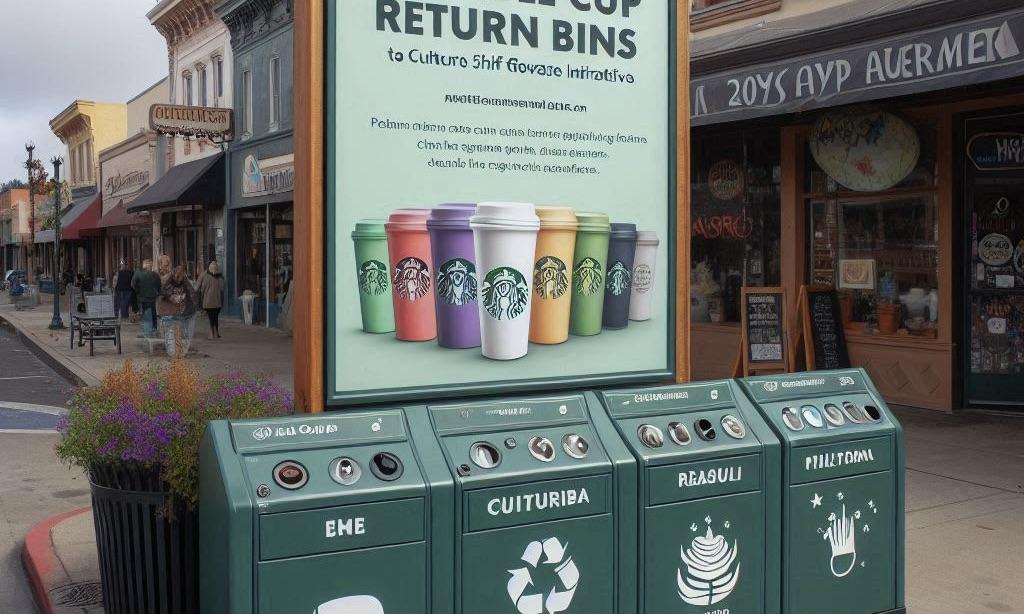
Additionally, the city will implement more than 60 cup return bins. Muuse, a 2018 NextGen Cup innovation challenge winner, will administer all servicing and reverse logistics for the initiative. The company will collect, cleanse, and recirculate used and returned cups.
According to Packaging Europe, the Petaluma Reusable Cup Project will collect baseline data regarding consumer participation and environmental impact until November. This data will be employed to determine the feasibility of scaling the model, and it will also be accessible to businesses and regulators as a reference point for developing new packaging regulations and reuse systems.
The city was selected for the initiative due to its geographical advantages, including its "dense layout," a "tight cluster" of restaurants and local stores within walking distance, and its proximity to suburban and rural areas. These advantages are anticipated to be beneficial for testing a reuse system. Local stakeholders will collaborate with the consortium to determine the most optimal locations for return points and promote program participation.
Additionally, they are purported to have assisted in adapting the initiative to the local infrastructure and policy. The policy environment of Petaluma is recognized as a beneficial factor, as it "encourages the discontinuation of non-recyclable single-use packaging."
Last year, the city also participated in a returnable cup pilot at participating Starbucks locations.
The Petaluma Reusable Cup Project has been made possible by the public-private collaboration between the City of Petaluma, Zero Waste Sonoma, Recology, and other community groups and local businesses.
“It takes an entire community to build the future of reuse that we want to see,” says Michael Kobori, chief sustainability officer at Starbucks. “Our environmental promise is core to our business, and that’s why we’re working toward a future vision of every Starbucks beverage served in reusable cups.”
“Together with fellow foodservice brands, local stores and community stakeholders, we’re leading this initiative to help further unlock behaviour change toward reusables, making it easy for our customers, and any customer, to choose to reuse and reduce waste.”
Kate Daly, managing director and head of the Center for the Circular Economy at Closed Loop Partners, continues, "In order to achieve a world free of packaging waste, it is imperative that food packaging reuse systems are scaled in a manner that has a positive environmental impact, while simultaneously meeting the current needs of the population and fostering a cultural shift toward reuse."
“By testing reuse across an entire city in partnership with key stakeholders from the community and industry, we can scale reuse collaboratively through thoughtful experimentation, building a future where reuse is the norm.”
“The City of Petaluma is laying the groundwork to make cup reuse not only an option, but the default,” states Kevin McDonnell, the Mayor of the City of Petaluma. “We have an amazing, engaged community, and we look forward to assisting the success of this programme, alongside our local restaurants and participating global brands that service our community.”
“Imagine a neighborhood where all to-go cups are reusable, and returning these cups required no extra steps,” says Zero Waste Sonoma executive director Leslie Lukacs. “By making reusable cups as convenient and accessible as single use, we can offer an alternative for residents when they forget to bring their cups.”
“Universal accessibility creates the foundation for a cultural shift towards reuse.”
Muuse COO Highlights the Importance of Returnable Packaging Systems to Reduce Single-Use Waste
Brittany Gamez, the COO and co-founder of Muuse, emphasizes the importance of supporting the operations behind the transition to returnable packaging systems to reduce single-use packaging waste. These systems must be implemented with consideration and responsibility to mitigate our contribution to accumulating additional refuse.
“It is through initiatives like this that we can identify what is needed to operationalize shared systems at this level and inform how reuse is implemented at scale.”
Participant in the project Last summer, The Coca-Cola Company conducted its trials in the United States. This included a partnership with r. Cup to disseminate reusable polypropylene cups at various venues in Los Angeles, San Francisco, Seattle, Denver, and Washington, D.C. This was intended to support Coca-Cola's World Without Waste global sustainable packaging strategy, which seeks to provide 25% of its international product volume in reusable packaging by 2030.
In April, Uber Eats and DeliverZero expanded their partnership to provide reusable, returnable food packaging for delivery in Los Angeles, San Francisco, and other West Coast regions of the United States. By doing so, they aimed to reduce packaging waste and carbon emissions.
In January, the municipality of Aarhus collaborated with TOMRA to test the "world's first" open-managed system for reusable transport packaging. The solution was designed to encourage a citywide transition from single-use packaging. The system was initially compatible with hot and cold beverage receptacles, including takeaway coffee cups.







