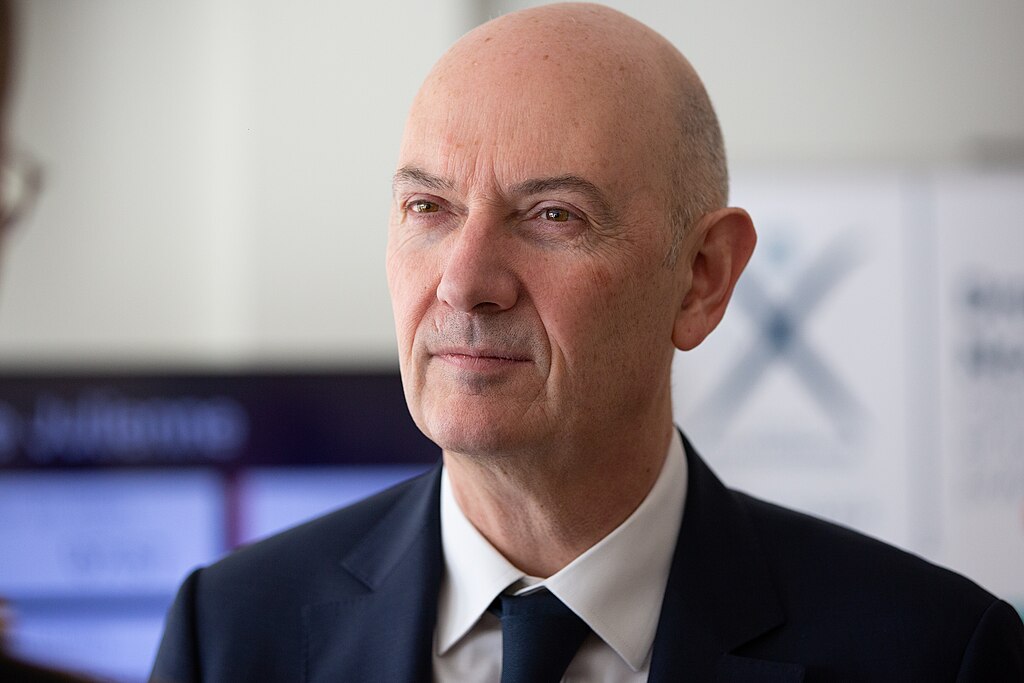
French Prime Minister Sebastien Lecornu appointed Roland Lescure, a loyal ally of President Emmanuel Macron, as France’s new finance minister on Sunday, sparking immediate backlash from opposition parties. The move, viewed as a gesture toward the left ahead of contentious budget negotiations, has failed to ease tensions in a sharply divided parliament.
Lescure, 58, a Franco-Canadian and former executive at Natixis Asset Management, briefly aligned with the Socialist Party early in his career before joining Macron’s centrist movement in 2017. His appointment aims to balance Macron’s pro-business stance with growing pressure from the left and rising far-right opposition. Yet lawmakers from both sides remain skeptical, with the hard-left France Unbowed party pledging an immediate no-confidence motion.
Prime Minister Lecornu, Macron’s fifth in two years, faces a tough test Tuesday when he presents his policy agenda to parliament. His two predecessors, Francois Bayrou and Michel Barnier, were ousted over failed efforts to control France’s soaring public deficit—the largest in the eurozone. Markets and ratings agencies are closely watching the government’s next fiscal steps.
Former finance minister Bruno Le Maire returns to government as defence minister, a key role as Europe reassesses its security posture amid U.S. President Donald Trump’s calls for greater EU involvement in supporting Ukraine. Meanwhile, several ministers retained their posts, including Jean-Noel Barrot at foreign affairs and Bruno Retailleau at interior, though internal dissent continues to simmer within Macron’s coalition.
To win Socialist support, Lecornu has proposed a long-demanded wealth tax and pledged not to bypass parliament to pass the budget. Socialist leaders, however, dismissed these efforts as inadequate. “Without a real policy shift, we will vote against the government,” said Socialist Secretary General Pierre Jouvet. With threats of a no-confidence vote looming, France’s political stability—and Macron’s legacy—hangs in the balance.