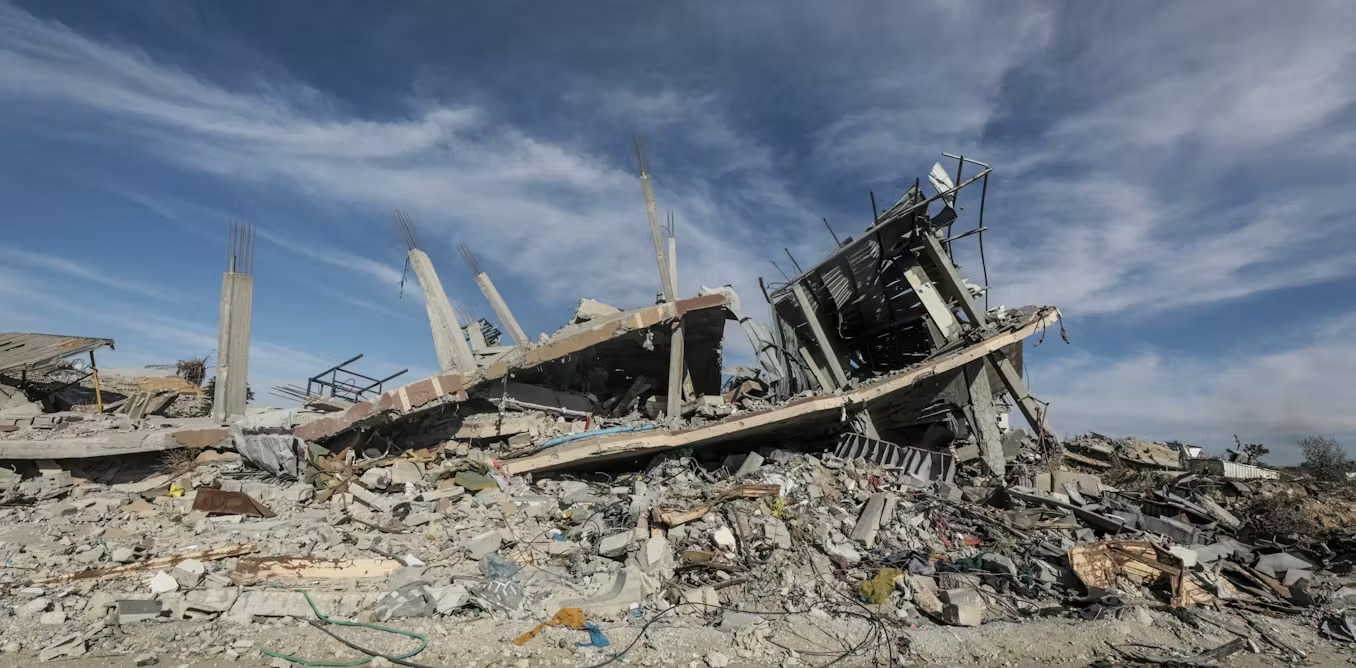
Israel has announced that Gaza’s main border crossing at Rafah will reopen for Palestinians on Monday, marking a significant development after the crossing remained largely closed for nearly two years amid ongoing conflict. Preparations are underway at the Rafah crossing, Gaza’s primary gateway to the outside world, which has been under Israeli military control on the Gazan side since May 2024.
Before the war, the Rafah border crossing between Gaza and Egypt served as the only direct exit point for most Palestinians and a critical entry route for humanitarian aid. According to COGAT, the Israeli military body responsible for humanitarian coordination, the crossing will initially reopen for Gaza residents traveling on foot only. Its operations will be coordinated with Egyptian authorities and the European Union, which is expected to have a monitoring role.
COGAT confirmed that a pilot phase is currently underway to test procedures and security measures. Movement in both directions, allowing Palestinians to leave and return to Gaza, is expected to begin the following day. Palestinian officials and European sources have confirmed these details, while Egypt has not yet issued an official public response.
Israel has emphasized that strict security checks will be enforced. The reopening is intended mainly for Palestinians seeking to leave Gaza for urgent reasons, particularly medical treatment, and for those who fled earlier in the war and are now returning. Gaza’s health ministry estimates that around 20,000 patients are awaiting permission to travel abroad for medical care.
Israeli defense officials stated that the crossing can process approximately 150 to 200 people per day in both directions, with more departures than returns due to patients traveling with escorts. Egyptian officials indicated that at least 50 Palestinian patients will cross into Egypt initially, with daily numbers expected to rise to around 200 people, including family members.
The reopening of Rafah is a key element of the first phase of U.S. President Donald Trump’s Gaza ceasefire plan. However, the ceasefire remains fragile, with renewed violence reported in recent days. Future phases of the plan include governance reforms, Hamas disarmament, Israeli troop withdrawal, and international oversight for Gaza’s reconstruction, all of which remain highly contested.