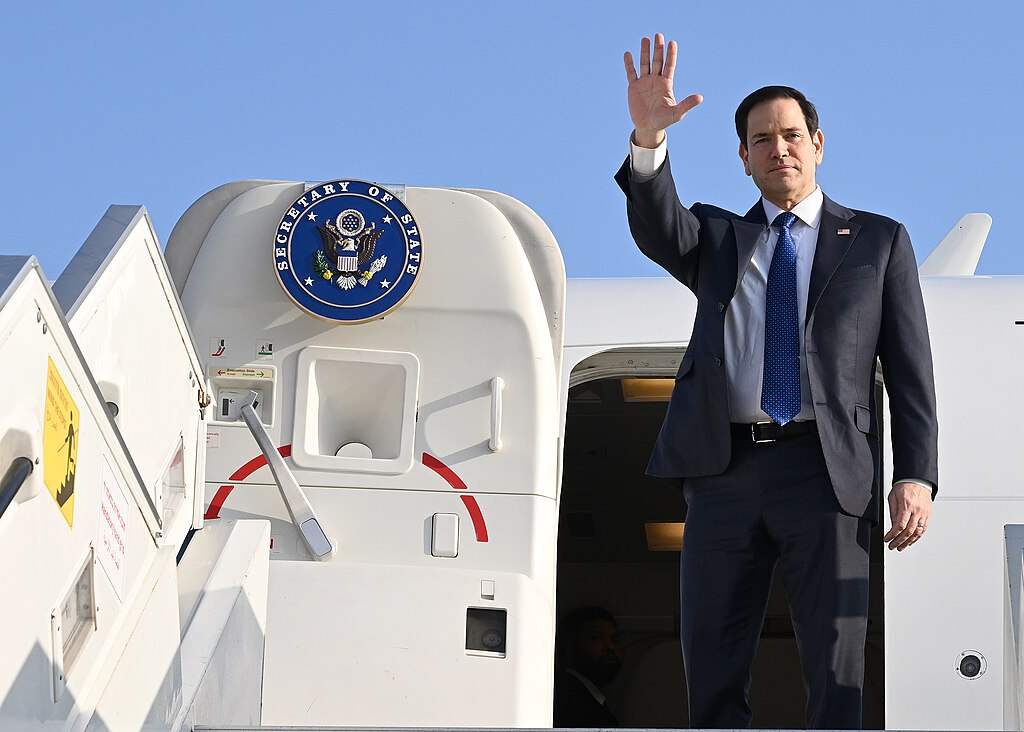
U.S. Secretary of State Marco Rubio questioned Italy’s reluctance to fully support Washington’s stance against Iran after meeting Italian Prime Minister Giorgia Meloni on Friday. The talks highlighted growing tensions between the United States and one of its closest European allies amid escalating conflict in the Middle East and concerns over the Strait of Hormuz.
Speaking to reporters after the meeting, Rubio said he could not understand why some allies, including Italy, were unwilling to strongly back efforts to counter Iran’s actions. He stressed that international partners needed to do more than issue statements if they wanted to prevent Tehran from threatening global shipping routes and regional stability.
Rubio warned that allowing Iran to claim influence over the Strait of Hormuz could create a dangerous international precedent. The strategic waterway remains critical for global oil shipments, and fears of disruption have already pushed fuel prices higher across Europe. Italy, which relies heavily on imported energy, has become increasingly concerned about the economic consequences of the Iran conflict.
Meloni described the 90-minute discussion with Rubio as “frank,” emphasizing that Italy remains committed to defending its national interests while maintaining strong transatlantic relations. Italian officials said the talks also covered Libya, Lebanon, Russia’s war in Ukraine, and upcoming diplomatic developments involving the United States and China.
The meeting comes as pressure grows on Meloni, who has traditionally maintained close ties with U.S. President Donald Trump. However, disagreements over the Iran war and Trump’s recent criticism of Pope Leo have strained relations between Rome and Washington.
Italy recently refused to allow U.S. aircraft to use the Sigonella air base in Sicily for operations connected to the Iran conflict, arguing that Washington had not obtained prior approval. Rubio also criticized some NATO allies for limiting the use of military bases, saying such restrictions could weaken the alliance’s strategic flexibility in future conflicts.