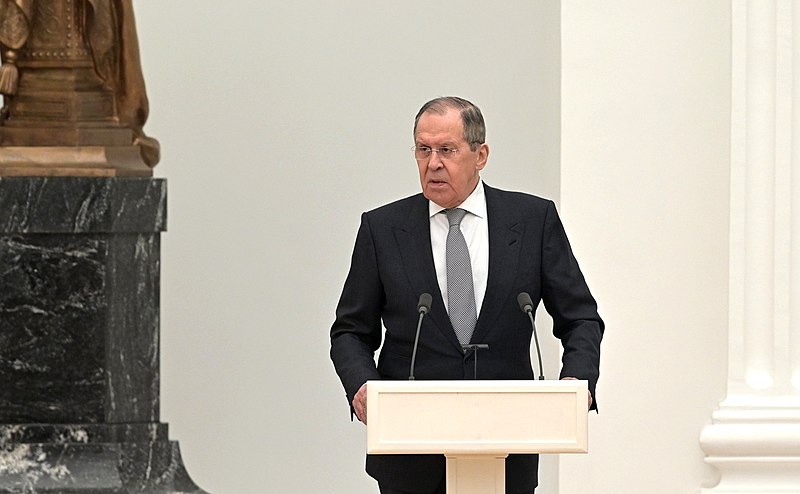
Aside from sanctions on Russia, several countries have also closed off their airspaces from Russia, preventing them from traveling to certain places. Russian foreign minister Sergey Lavrov was led to cancel his expected visit to Serbia as several European countries closed their airspaces to Russian planes.
Officials reported that Lavrov was initially expected to visit Serbia, one of Russia’s few allies in its war with Ukraine, this week. However, Lavrov was forced to cancel his plans when several Eastern European neighboring countries closed their airspaces, refusing access. Lavrov was initially set to hold talks with officials in Belgrade.
Bulgaria, Montenegro, and North Macedonia all closed their airspaces to Lavrov’s plane. The European Union countries also closed their airspaces to Russian aircraft in response to Moscow’s invasion of Ukraine.
“The countries around Serbia have closed the channel of communication by refusing to authorize the overflight of the plane of Sergey Lavrov who was headed to Serbia,” said foreign ministry spokesperson Maria Zakharova according to Russian news outlets.
“The Russian delegation should have arrived in Belgrade for talks. But the EU and NATO member countries closed their airspace.”
The Kremlin said the three Eastern European countries that closed their airspace to Lavrov’s plane were committing “hostile actions.”
Kremlin spokesperson Dmitry Peskov told reporters that such actions could pose problems at the time of high-profile diplomatic meetings, but it would not prevent Moscow from maintaining communications with countries it deems friendly.
Lavrov described the move by the three countries as “unprecedented.” Lavrov is also among the officials sanctioned by the West and other countries for Russia’s invasion of Ukraine.
Ukrainian and Russian forces are launching strikes in the contested area of Severodonetsk as Moscow seeks to capture the key city in its new offensive. Ukrainian President Volodymyr Zelenskyy said Russian forces had the numerical advantage and that the ongoing battle in the area was “difficult,” but Ukraine had “every chance” to launch counterattacks.
“The situation is difficult in the east,” said Zelenskyy during a media briefing in Kyiv. “We are in control of the situation, there are more [Russians], they are more powerful, but we have every chance to fight.”